Podcast Hosting vs a Website: What’s the Difference?
Last updated: August 2026
Podcast hosting stores your audio and builds the RSS feed that apps read.
A website is a page people visit in a browser.
They solve different problems, and you will likely want both eventually, but only one of them is required to have a podcast at all: the host. A website is more a “nice to have” addition that you can work on after you get your podcast up and running. Here’s a deeper look at the differences.
What is the difference between podcast hosting and a website?
The cleanest way to hold it: the host is infrastructure, the website is marketing. One serves machines, the other serves humans.
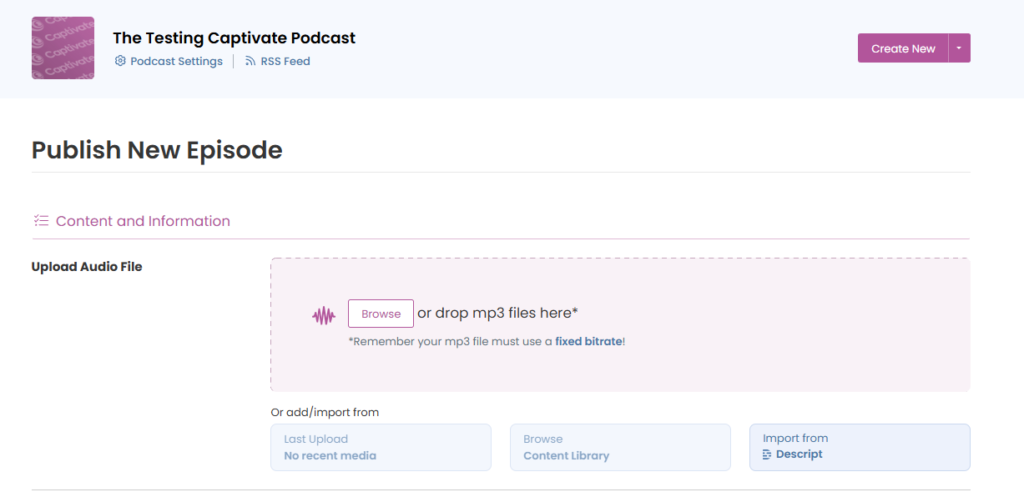
A podcast host does three things a website cannot: it serves large audio files to a lot of people reliably, it produces a valid RSS feed, and it counts your downloads to an industry standard. Apple Podcasts, Spotify, and every other app read that feed to carry your show. Without a host, there is no feed, and without a feed, there is no podcast in the apps. Full explainer in our article about podcast hosts.
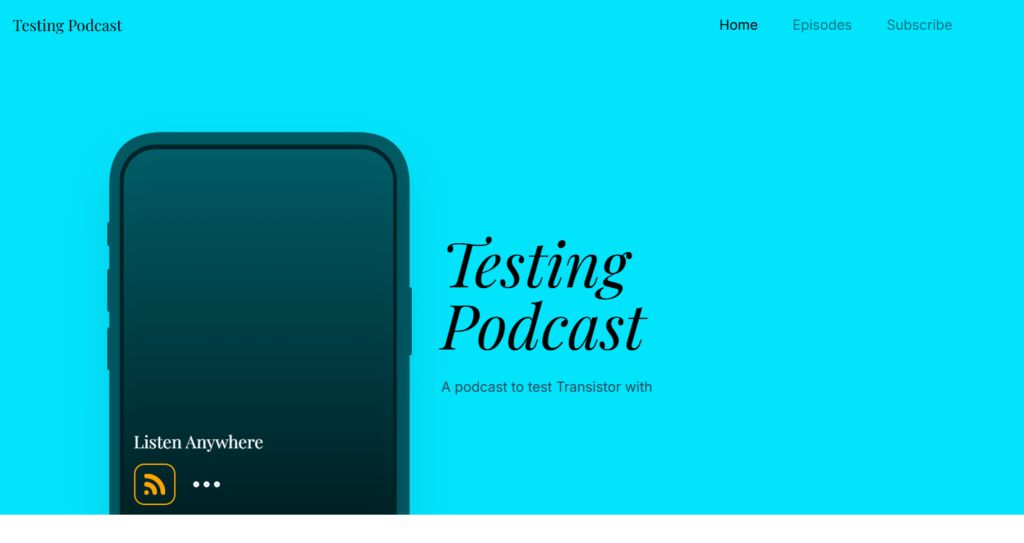
A website is where a person types your address and lands on a page. It is discovery for humans and search engines, a home for your episodes with player embeds, show notes, an email signup, links to whatever you sell. It reaches Google. It does not, on its own, get you into Apple Podcasts.
So they do not compete. The host makes the show exist across apps. The website gives it a front door on the open web. Different jobs, both useful.
Do you need a website for your podcast?
No. But if you’d like to see it grow, it’s something you should put on your to-do list.
You can publish a successful podcast with a host and nothing else, because the apps are where most listening happens and the host feeds all of them. Plenty of shows run for years on the basic landing page their host provides and never build a standalone site.
You start wanting a real website when you want things the apps do not give you. Control over how the show looks. A place to capture emails so you own the audience instead of renting it from a platform. SEO, so people searching your topic find your episodes on Google. A hub for sponsors, a store, a course, a booking page. The moment the podcast is a business rather than a hobby, a proper site earns its keep. If email capture is the reason you want the site, start with how Beehiiv and Kit compare for a podcast newsletter.
The good news is you do not have to choose the hard way. Many hosts include a decent built-in website, which covers most creators for a long time. If you outgrow that, you point a custom domain at a full site and keep the host doing the audio and the feed underneath.
Can a website replace a podcast host?
Almost never, and trying is how people break their show. A standard website is not built to serve big audio files to thousands of listeners at once, and it does not produce the compliant, well-behaved RSS feed apps expect. Serve episodes off your own site, and you invite slow loads, blown bandwidth, and feed errors that quietly drop you from a directory.
A handful of all-in-one site builders bundle podcast hosting as a feature, so the site and the host live in one product. That can work fine for a small show. Read the fine print, though, because the hosting piece is often thinner on download analytics, dynamic ad insertion, and private feeds than a dedicated host, and those gaps cost you later when you want to monetize.
FAQ
Do I need both a podcast host and a website? Not to start. A host is required to get into the apps. A website is optional at launch and becomes worth it once you want email capture, SEO, and a home for sponsors or products.
Can I host my podcast on my own website? Not well. Standard websites are not built to serve large audio at scale or produce a proper RSS feed. Use a dedicated host and embed the episodes on your site.
Does my podcast host give me a website? Many do include a basic built-in site, which is enough for a long time. Some are genuinely good, and we compare the best in our free-website guide.
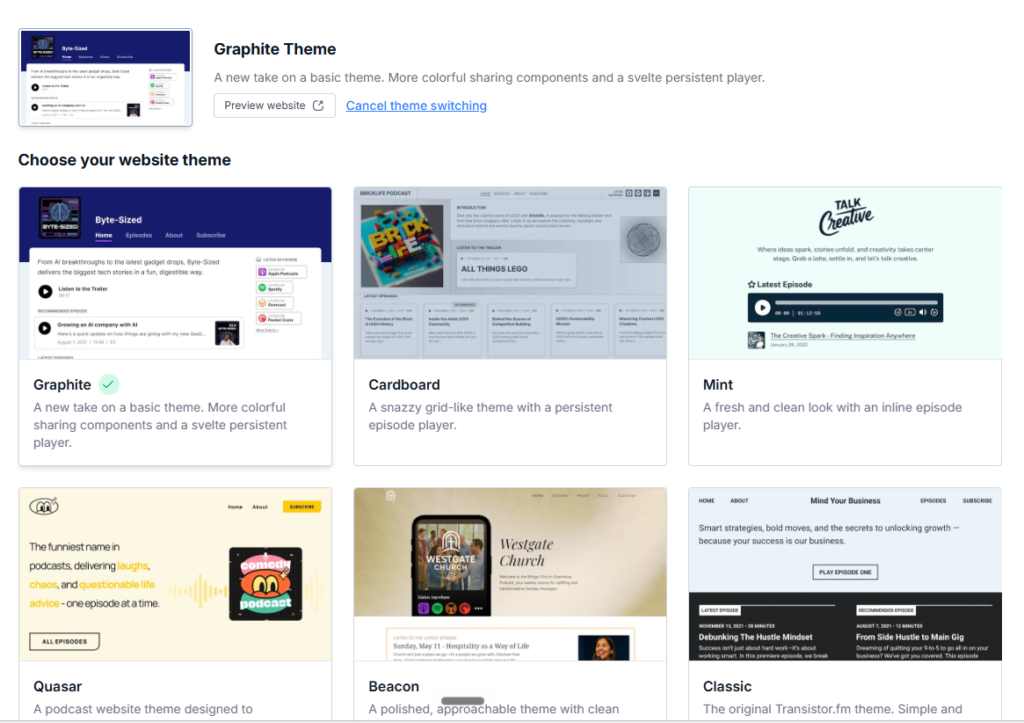
What does the website do that the host does not? It reaches humans and Google, captures emails, and gives you full control of design and selling. The host reaches the listening apps and counts your downloads.