Best Podcast Host for Monetization and Sponsorships (2026)
Last updated: September 2026
This post contains affiliate links, and we may earn a commission if you sign up through them, at no cost to you. See our Affiliate Disclosure. Pricing as of August 2026.
If the goal is money, Captivate is the best podcast host for monetization. It puts self-serve dynamic ad insertion on every plan, so you can record one sponsor spot and drop it into every episode yourself, no gatekeeper. Pick Acast instead if you would rather start free and let a marketplace sell the ads for you, the trade weighed up in Acast versus Buzzsprout.
What is the best podcast host for making money from a show?
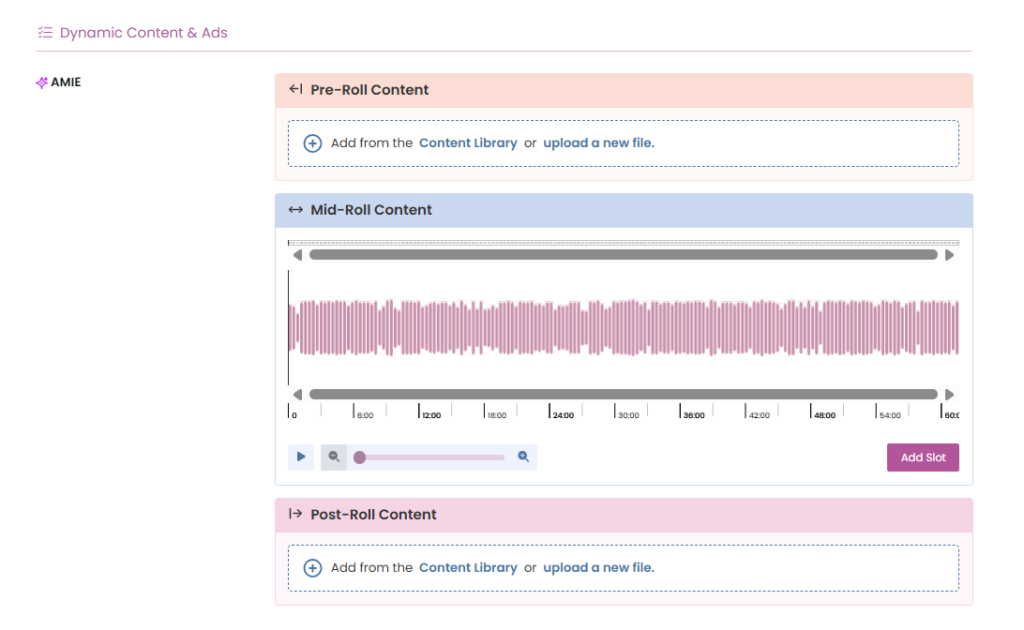
Captivate, if you want to run your own sponsor deals. Its AMIE dynamic ad insertion is included on every tier, including the entry Personal plan, so you record a single pre-roll or mid-roll and insert it across your whole back catalog without re-editing a thing. That matters because the money in podcasting is usually a direct sponsor you found yourself, and you need a host that lets you place and swap those ads freely.
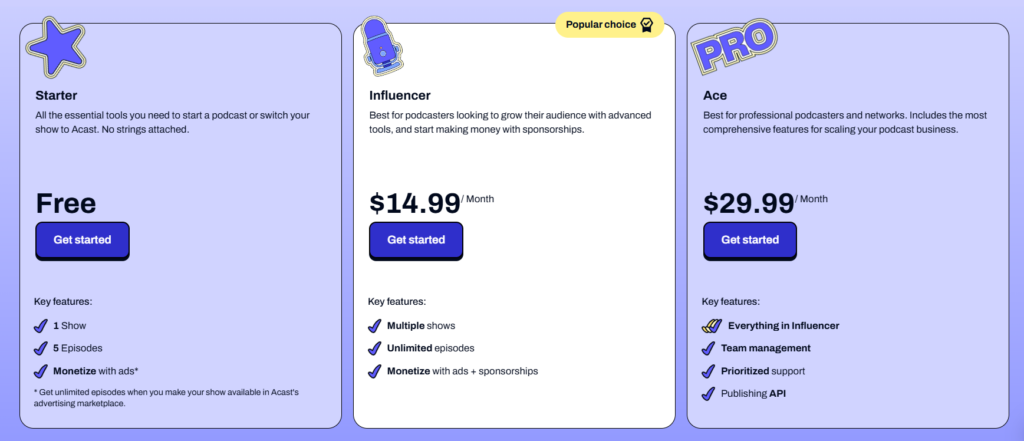
Acast is the better call if you have no sponsor lined up and no time to chase one. Its ad marketplace places advertisers into your show for you, and you can host free on the Starter plan while you wait to qualify. Two different paths to the same goal: Captivate hands you the tools, Acast brings the buyers.
How do the monetization hosts compare?
Only the rows that decide a monetization pick: the price to get in, whether you can run your own inserted ads, whether the host sells ads for you, listener support, and how big you need to be before any of it pays.
| Host | Entry price | Self-serve dynamic ad insertion | Built-in ad marketplace | Listener support / subscriptions | What it takes to start earning |
|---|---|---|---|---|---|
| Captivate | $17/mo billed yearly ($19 monthly) | Yes, AMIE on every plan, free | No, you bring your own sponsors | Yes, Memberships and Tipping on every plan | A sponsor deal you land yourself |
| Acast | Free Starter, Essential €14.99/mo billed yearly | Yes, on paid plans | Yes, places advertisers for you | Yes, subscriptions on the higher Ace tier | 1,000+ monthly listeners to join the marketplace |
| Podbean | Unlimited Audio $12/mo billed yearly ($17 monthly) | Yes, PodAds, charged at $1 CPM | Yes, Ads Marketplace | Yes, Apple subscriptions, premium content | Marketplace approval |
| Buzzsprout | $15/mo billed yearly ($18 monthly) | Yes | Affiliate marketplace, no audience minimum | Yes, listener support at a 15% platform fee | Nothing, the affiliate marketplace starts from episode one |
Why does Captivate win for running your own sponsor spots?
Because the whole point of a direct sponsorship is control, and Captivate gives you the most of it for the least money. AMIE, its dynamic ad insertion engine, sits on every plan at no extra charge, which is rare. Most hosts either lock inserted ads behind a pricier tier or push you into their own marketplace and take a cut. Here you record one spot, choose pre-roll or mid-roll, and it lands in every episode you pick, old ones included. When the deal ends, you pull the ad and the campaign clears itself out.
The entry Personal plan is $17 a month billed yearly, or $19 month to month, and it carries 30,000 downloads and every feature Captivate makes. So a show that lands even one modest local sponsor can run that campaign properly on the cheapest plan. Captivate now also runs its own ad marketplace, Captivate Marketplace, where advertisers can approach a listed show directly. Selling a slot yourself is still the other route, and it is real work if you have never done it.
When is Acast the better call for monetization?
When you want someone else to sell the ads. Acast runs an ad marketplace that matches advertisers to your show and inserts the spots automatically, so you never pitch a brand or send an invoice. You can start on the free Starter plan, which caps you at one show and five episodes but lets you monetize once your show is in the marketplace, and it does ask for a card at signup. Clear that bar and the marketplace can effectively cover your hosting.
The catch is size and cut. Acast says a show needs 1,000 or more monthly listeners to apply to its marketplace, and Acast keeps a share of the ad revenue, commonly cited near half. So it is hands-off income, not full income. If you would rather trade a slice of the money for never having to chase a sponsor, start with Acast and let the marketplace do the selling.
What about Podbean and Buzzsprout for monetization?
Both are worth a look, for different reasons.
Podbean is the do-everything budget option. Its Unlimited Audio plan is $12 a month billed yearly, or $17 monthly, and it stacks nearly every money tool in one place: an Ads Marketplace, PodAds dynamic insertion for your own sponsors, Apple subscriptions, and premium episodes. Its live gifting ended when Podbean shut down live streaming. The wrinkle to know is that PodAds runs at $1 CPM on that plan, so you pay a dollar per thousand ad impressions to insert your own ads, a small cost most shows will not notice but should still see coming. Good pick if you want to try every revenue stream cheaply. Here is Podbean’s plan lineup.
Buzzsprout takes the opposite angle. Its standout is an affiliate marketplace with no audience minimum, so a brand-new show can start earning commission from episode one, before it is anywhere near ad-network size. It also offers listener support, which keeps 15 percent of what fans pay. For a small show with no downloads yet, that from-day-one earning is the most realistic first dollar, and you can read where it fits in Buzzsprout pricing. See the plans through Buzzsprout.
How much can you earn from podcast ads?
Less than you think, until your downloads are real. This is the part most host comparisons skip. Inserted ads and marketplace deals both pay on downloads, usually somewhere in the ballpark of $15 to $25 per thousand for a mid-roll spot, so a show pulling 200 downloads an episode is looking at a few dollars a spot, not a paycheck. The host does not change that math. A tiny show earns little on Captivate, Acast, Podbean, or anywhere else.
So the right move depends on where you are. Small and just starting, Buzzsprout’s affiliate marketplace and listener support give you something to earn from now. Growing and ready to sell a real sponsor, Captivate’s free ad insertion is the cheapest way to run that deal well. Either way, the download numbers do the heavy lifting, which is why the industry’s own podcast ad revenue data tracks total downloads, not the number of shows. Pick the host that fits your stage, then put the work into audience.
What to look for in a host for monetization?
- Self-serve dynamic ad insertion, so you can run and swap your own sponsor spots without re-editing episodes
- Whether inserted ads are free or carry a per-impression cost like Podbean’s $1 CPM
- A built-in ad marketplace if you would rather the host sell the ads, plus its audience minimum and revenue cut
- Listener support or subscriptions as a second stream, and the platform fee it charges
- No trap where basic monetization is locked behind a much pricier tier
Weigh a host against that list before you commit, because the wrong pick quietly taxes every dollar you make.
Buzzsprout Ads vs Acast: how do the built-in ad marketplaces differ?
Both place ads for you, but they sell to different buyers and pay differently. Buzzsprout Ads drops automatic mid-rolls into your recent episodes, and you listen to and approve or decline every ad before it runs, which keeps a bad fit off your show. It pays 0.7 to 1.4 cents per download, so figure roughly $7 to $14 for every thousand downloads an ad serves. Simple and hands-off, though a show needs 1,000 downloads in 30 days and a paid Buzzsprout plan before it can switch Buzzsprout Ads on.
Acast runs a bigger, more ambitious operation. Programmatic ad insertion plus a direct sales team pitching brands, billed as one of the industry’s larger ad marketplaces. The upside is scale and a real shot at brand deals. The catch is the bar to entry. Acast asks for 1,000 or more monthly listeners to qualify, and Acast keeps a share of the revenue. So Buzzsprout Ads is the easier on-ramp for a small show, and Acast is the higher ceiling once you have the audience to clear its gate.
Verdict
For monetization, Captivate is the pick. Free dynamic ad insertion on every plan, starting at $17 a month billed yearly, makes it the cheapest honest way to run your own sponsor deals. Start a Captivate trial. If you would rather a marketplace sell the ads for you and you have the audience for it, Acast is the co-pick, and you can start on its free plan. The downside to plan around with Captivate: it hands you the ad tools but not the advertiser, so you are the one closing the deal.
FAQ
What is the best podcast host for monetization? Captivate, if you want to run your own sponsor ads. Its AMIE dynamic ad insertion is included free on every plan, starting at $17 a month billed yearly, so you can insert and swap sponsor spots across your whole catalog yourself.
Which podcast host sells ads for you? Acast and Podbean both run ad marketplaces that place advertisers into your show automatically. Acast needs 1,000 or more monthly listeners to join and keeps a share of the revenue.
Can you make money podcasting with a small audience? A little. Ad income pays on downloads, so a small show earns little regardless of host. Buzzsprout’s affiliate marketplace and listener support are the most realistic early money because they have no audience minimum.
Does Captivate charge extra for dynamic ad insertion? No. AMIE is included on every Captivate plan, including the entry Personal plan, at no added cost. That is a big reason it beats hosts that gate ad insertion behind a higher tier.
**