How Many Downloads Do You Need to Get a Podcast Sponsor?
Last updated: September 2026
This post contains affiliate links, and we may earn a commission if you sign up through them, at no cost to you. See our Affiliate Disclosure. Pricing as of July 2026.
The 10,000-download rule is a myth that keeps small shows from ever asking. You can start earning ad money at about 1,000 downloads per episode through a host marketplace, you get broadly attractive to real sponsors somewhere between 5,000 and 10,000, and the exact number depends entirely on which door you walk through. Here is how the math actually works.
How many downloads do you need to get a podcast sponsor?
About 1,000 downloads per episode to start earning through a marketplace, not the 10,000 everyone quotes. Buzzsprout Ads turns on once your show hits 1,000 downloads in a rolling 30-day window, and Acast’s marketplace lets you apply at 1,000 monthly listeners. Those are real earning doors that open four figures below the mythical threshold.
The confusion comes from mixing two different things. Landing a big direct sponsor who emails you a contract is one game, and yes, those buyers usually want 10,000-plus downloads per episode before they will talk. Getting ads dropped into your show automatically through your host’s ad marketplace is a completely different game, and that one starts at roughly 1,000. Most new podcasters only ever hear about the first game, so they assume they are years away from any money at all. They are not. If your episodes clear about 1,000 downloads in their first month, you already qualify for the marketplace route today.
Where did the 10,000-downloads number even come from?
From direct sponsorship, where a brand pays you straight for a host-read spot. Those advertisers and the agencies that book them screen for scale, and the working floor most of them use sits around 10,000 downloads per episode. That single benchmark got repeated so often it hardened into a law, even though it only describes one narrow way to get paid.
Here is why the number is real but misleading. A brand cutting you a direct check wants enough ears to justify the effort of negotiating, briefing, and tracking one show. Ten thousand downloads is their rough cutoff for “worth my time.” But that cutoff says nothing about whether you can earn, only about whether a hands-on human buyer will chase you. Automated marketplaces flip that logic. They pool thousands of small shows together and sell the whole audience to advertisers at once, so your individual size stops being the gate. That is the entire reason a 1,200-download show can carry ads while its host still could not land a solo brand deal.
What can you actually earn at 1,000 downloads?
Not much per episode, but it is real, and it scales cleanly. Podcast ads price on CPM, meaning cost per thousand downloads. Acast pegs pre-recorded spots at $15 to $30 CPM and host-read sponsorships at $25 to $40 CPM in 2026, so one ad slot on a 1,000-download episode is worth roughly $15 to $40.
Run the math forward and it gets clearer. Put a pre-roll and a mid-roll on that same 1,000-download episode and you are looking at maybe $30 to $80 an episode, depending on format and who is buying. Marketplace inventory pays on the lower end. Buzzsprout Ads, for instance, sells to advertisers at about a $10 CPM, and it does not publish the host’s share of that, so treat your cut on automated fill as modest at this size.
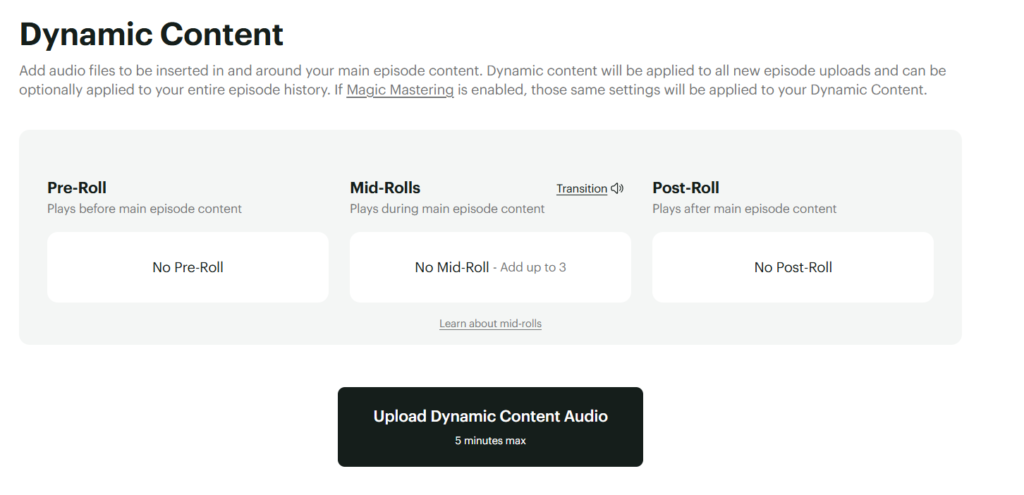
The point is not that 1,000 downloads makes you rent money. It is that the meter starts running, and every download you add pushes the same CPM against a bigger number. At 5,000 downloads, the identical setup earns five times as much for zero extra work.
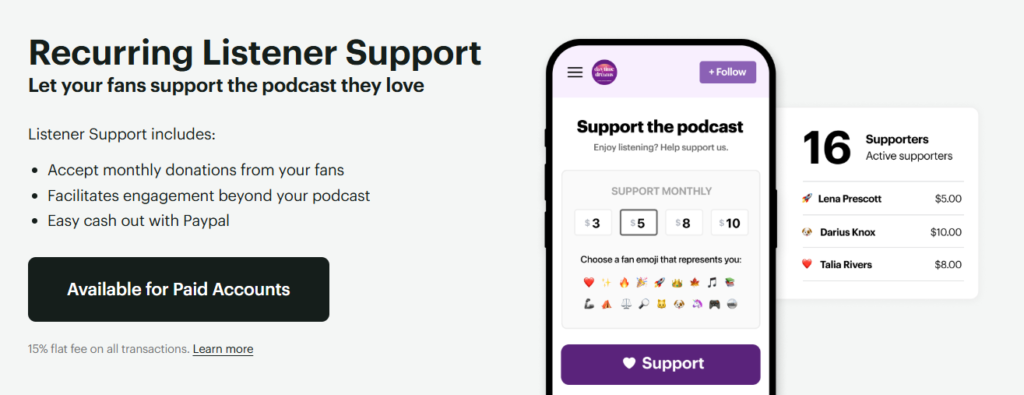
Ads are also not the only meter you can start. Buzzsprout’s listener-support tool has no download threshold on it at all, only a paid plan, and it takes a flat 15 percent of whatever your fans send. At a few hundred downloads, that will often out-earn programmatic fill, because a handful of people who genuinely care beats a thousand who half-listened on a commute.
Which podcast hosts let small shows sell ads?
The ones with a built-in ad marketplace, so you are not cold-emailing brands yourself. Two stand out. Buzzsprout Ads opens at 1,000 downloads in 30 days, and Acast’s marketplace takes applications at 1,000 monthly listeners, per each platform’s own eligibility page. Both handle the selling, the insertion, and the payment while you keep making episodes.
Buzzsprout is the softer landing for a first-timer. The eligibility is plain: 1,000 downloads in a rolling 30-day window, counted the strict way a download is measured, plus at least 5 published episodes, with most of your recent ones running 23 minutes or longer, and the dashboard walks you through it. The honest downside is that Buzzsprout Ads fills programmatically at a modest CPM, so early checks are small. Start with Buzzsprout.
Acast leans more toward growth. Its marketplace can pull higher-value host-read and targeted campaigns as you climb, and its free Starter plan lets you begin at zero cost. The catch is that free Starter caps you at 5 episodes and asks for a card at signup, so it is more on-ramp than permanent home unless the ad money carries you. Explore Acast. If you are choosing between the two, Acast vs Buzzsprout puts them head to head. For the fuller picture on getting paid, see how podcasts make money and the best podcast hosts for monetization.
When are you actually attractive to real sponsors?
Somewhere between 5,000 and 10,000 downloads per episode is where the money and the interest both turn serious. Acast notes most creators start seeing meaningful marketplace revenue around 5,000 monthly listeners, and direct brand buyers generally want to see 10,000-plus per episode before they will negotiate a dedicated read.
Think of it as three gears. Around 1,000 downloads, you are in the marketplace and earning pocket money on autopilot. Around 5,000, the marketplace revenue gets worth watching, and you have enough of a track record to pitch a niche sponsor who cares more about your specific audience than your raw size. Past 10,000, you are in range of the direct deals that pay the best CPMs, the host-read spots at $25 to $40 per thousand.
None of this requires you to hit 10,000 before you earn a cent. It just tells you which tier of buyer you can reach at each size. For where your show sits, what counts as a good podcast download number breaks down the benchmarks by percentile.
FAQ
Can you get sponsors with under 1,000 downloads? Direct sponsors, almost never, since even niche brands want more scale. But you can still earn through affiliate codes and listener support at any size, and a host marketplace like Buzzsprout Ads turns on the moment you clear 1,000 downloads in 30 days.
Is 10,000 downloads really the sponsor threshold? Only for direct brand deals booked by a human buyer. Automated ad marketplaces accept shows at roughly 1,000 downloads, so the 10,000 figure describes one path to money, not the only one.
How much do podcast ads pay per download? Ads price on CPM, cost per thousand downloads. In 2026, that runs about $15 to $30 for pre-recorded spots and $25 to $40 for host-read, per Acast, so 1,000 downloads is worth roughly $15 to $40 per ad slot.
Do I need a specific host to run ads? It helps a lot. Hosts with a built-in marketplace, such as Buzzsprout and Acast, sell and insert the ads for you at small sizes. Without one you are stuck selling directly, which realistically needs 10,000-plus downloads to work.