How to Read Your Podcast Analytics
Last updated: September 2026
The podcast analytics, or metrics, that matter are downloads (your reach), unique listeners (your real audience size), consumption or completion rate (whether the episode held), and retention (where people drop off). Watch those four as trends, not single numbers. Most of the rest is noise you can safely ignore. Here is how to read each one without fooling yourself.
Which podcast metrics matter?
Four, and they answer different questions. Read them together or you will misjudge the show.
Downloads measure reach: how far an episode traveled, counted against the IAB Tech Lab standard that sponsors trust. Judge them on the 7-day and 30-day windows, since episodes keep getting pulled for weeks. What that standard actually counts, and what it throws out, is in what counts as a podcast download. Where your own numbers sit against everyone else is in what counts as a good download number.
Unique listeners cut downloads down to actual people, stripping repeat pulls from the same device. This is your true audience size, and it is always smaller than your download total. Do not confuse the two.
Consumption or completion rate is the honesty check. It shows what percentage of the episode people actually listened to. A big download number with a 30 percent completion rate means the topic pulled people in and the episode lost them.
Retention or drop-off maps show where in the episode listeners leave. A cliff at the four-minute mark tells you your intro runs long. This is the single most useful graph most hosts give you, and almost nobody looks at it.
What is the difference between downloads and listeners?
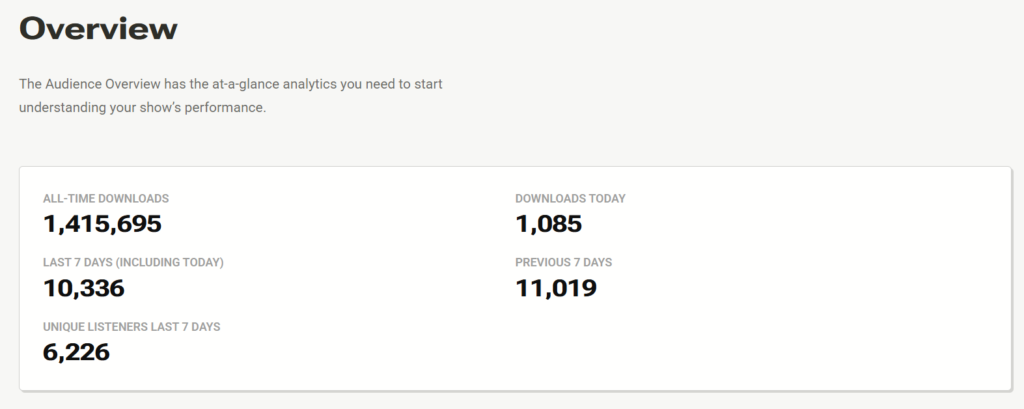
Downloads count file requests. Listeners count people. One person who downloads three episodes shows up as three downloads but one listener, which is why the two numbers pull apart fast.
This matters most when you talk to sponsors or judge growth. Your download total is the bigger, flashier figure, and it is the one advertisers pay CPM against, so it is not wrong to lead with it. But if you want to know whether your audience is actually growing, unique listeners is the truer signal, because it filters out the same fans downloading more back catalog. A show can show rising downloads while its real audience is flat, just because existing fans are bingeing older episodes.
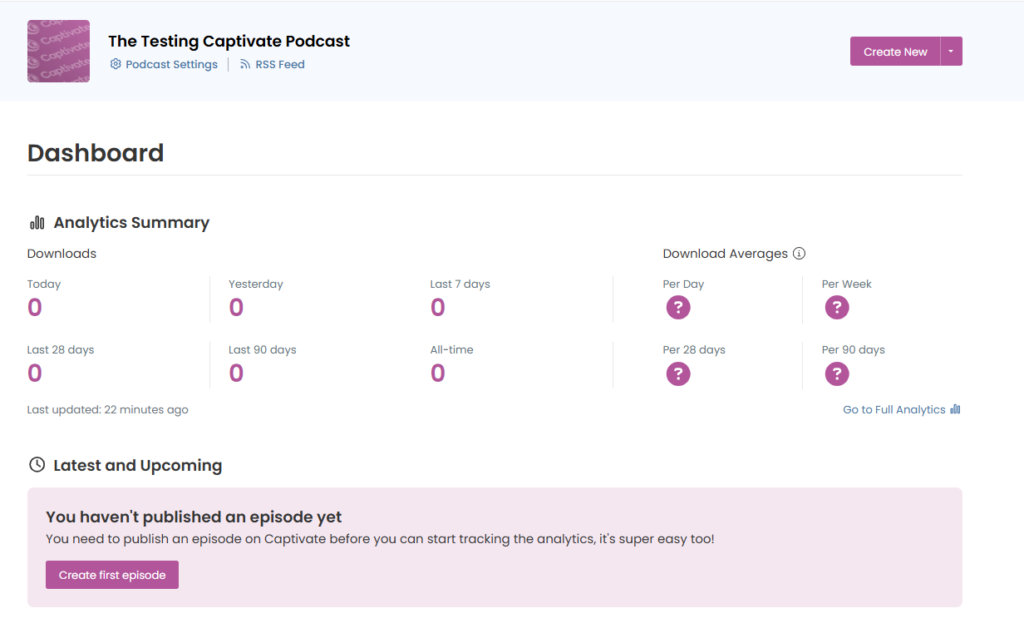
Watch both. Rising downloads and rising unique listeners mean real growth. Rising downloads with flat listeners means your current audience is more engaged, which is good, but you are not reaching new people. Different problem, different fix. What those numbers are worth is a separate question, covered in how podcasts actually make money. If your host does not separate the two clearly, that is a reason to look harder at its analytics. Buzzsprout, for example, puts IAB-certified advanced analytics on every paid plan rather than a higher tier, as covered in our Buzzsprout review.
Which podcast analytics can you safely ignore?
Most of the ones that feel good. Total all-time downloads is a vanity number, satisfying and close to useless for decisions, because it only grows and tells you nothing about a specific episode or recent trend.
Chart position is another one to hold loosely. Cracking a category chart for a day is a nice screenshot and a weak business signal, since charts reward launch-week bursts more than durable audience. Follower and subscriber counts inside a single app matter less than they seem to, because your feed reaches many apps and no one app has the full picture.
Focus your attention where a decision hangs on it. Is the episode holding listeners, retention, and completion? Is the audience actually growing, unique listeners over time? Did a topic or guest move the needle, per-episode 7-day downloads compared across episodes? Everything else is context at best.
FAQ
What is the most important podcast metric? For growth, unique listeners over time. For episode quality, completion or consumption rate. Downloads measure reach but do not tell you whether people actually listened.
Why are my downloads higher than my listeners? Because one listener can download several episodes, and each request counts as a download. Unique listeners filter repeat pulls to show your real audience size.
What is a good podcast completion rate? It varies by format, but many shows see 70 to 80 percent on engaged audiences. The number matters less than the trend and where in the episode people drop off.
Which podcast stats do not matter? All-time total downloads, single-day chart positions, and per-app follower counts are mostly vanity. They feel good and rarely change a decision.