Buzzsprout Alternatives: Better Options by Use-Case
Last updated: September 2026
This post contains affiliate links, and we may earn a commission if you sign up through them, at no cost to you. See our Affiliate Disclosure. Pricing as of August 2026.
Buzzsprout is a great first host, so people rarely leave it because it is bad. They leave because they outgrew one specific limit. Running more than one show? Go Transistor. Want inserted ads without paying a big brand tax? Captivate. Uploading too much for the 6-hour cap, or just want cheaper? Podbean. Want to start free and sell ads later? Acast. Pick by the wall you hit. Whichever you land on, switching hosts without losing your subscribers is the four-step move that gets you there.
Why do people actually leave Buzzsprout?
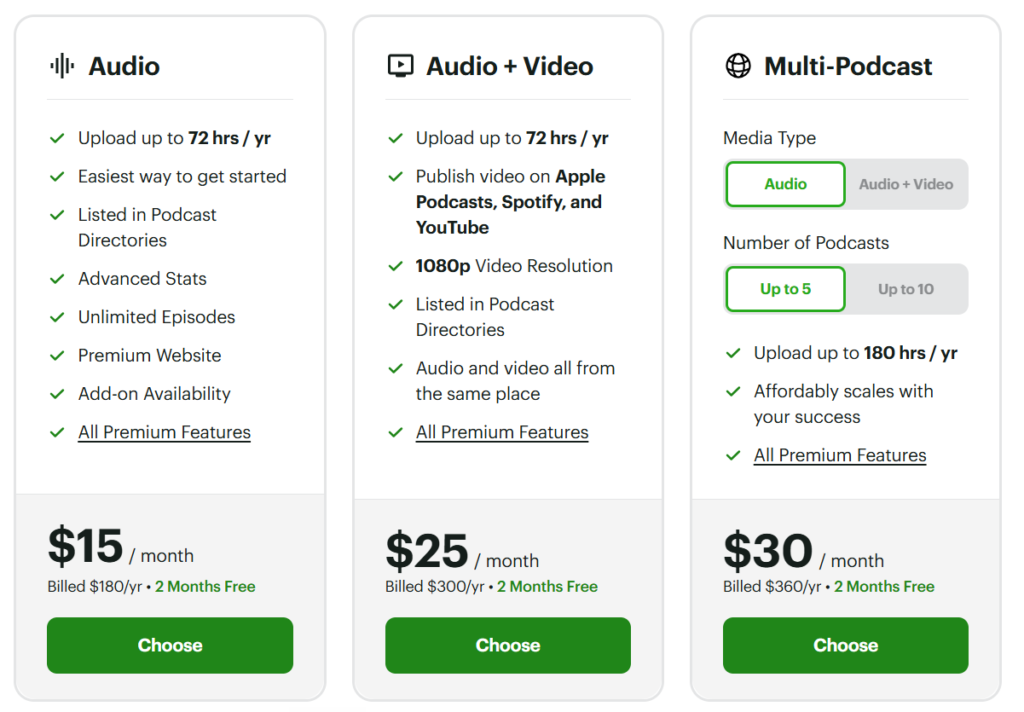
Not because it stopped working. Buzzsprout’s Audio plan is $15 a month billed yearly, the dashboard is the friendliest in the category, and transcripts come baked in. Every tier is broken down in Buzzsprout pricing. For a first show it is still one of the picks I hand people without thinking. The reasons to leave are narrow and specific.
Four walls come up again and again. One, the Audio plan hosts a single show, so the day you launch a second podcast you are either paying for a second account or jumping to the $30 Multi-Podcast plan. Two, the 6 upload hours a month. Publish daily, or publish long, and you run out of room fast. Three, the ad marketplace. Buzzsprout’s Dynamic Content drops your own pre-roll, mid-roll, and post-roll spots into the back catalog, but Buzzsprout Ads, the part that sells the spots for you, stays closed until 1,000 downloads in 30 days. Four, cost. Some people just want to pay less, or nothing.
If none of those is biting, stay put. Buzzsprout is not the problem, and what Buzzsprout gets right makes the case for staying.
Which Buzzsprout alternatives are worth comparing?
| Host | Entry price | Shows on the entry plan | Upload limit | Self-serve ad insertion | Why switch here |
|---|---|---|---|---|---|
| Buzzsprout | $15/mo yearly, $18 monthly (Audio) | 1 | 6 hours a month | Yes, Dynamic Content | Baseline |
| Transistor | $19/mo (Starter, 20k downloads) | Unlimited | No hour cap, download-metered | On the $49 tier | Run several shows on one bill |
| Captivate | $17/mo billed yearly (30k downloads) | Unlimited | Unlimited uploads | Yes, included | Ad insertion plus every feature |
| Podbean | $12/mo yearly, $17 monthly (Unlimited Audio) | 1 | Unlimited storage, 1GB/mo new | Yes, about $1 CPM | Cheapest, roomiest storage |
| Acast | Free Starter, paid from about €14.99/mo yearly | 1 free, unlimited on paid | Generous | From the Essential plan | Start free, grow into ad money |
The entry prices sit close together. What splits them is which Buzzsprout wall each one knocks down. Read them by your reason for leaving, not by the sticker.
What is the best Buzzsprout alternative for multiple shows?
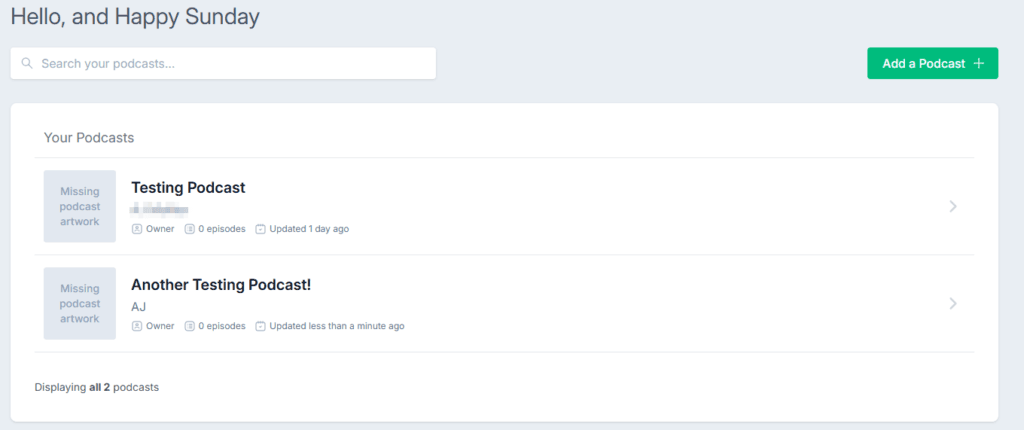
Transistor, and it is not close. Every plan hosts unlimited podcasts on one account and one bill, starting at $19 a month on the Starter tier with 20,000 downloads. Each show gets its own dashboard, its own feed, and its own website. That is the exact thing Buzzsprout’s single-show Audio plan cannot do, and it is why networks and agencies live on Transistor.
Do the math against Buzzsprout and it lands quickly. A second Buzzsprout account, or the $30 Multi-Podcast plan, gets you 5 to 10 shows sharing one pool of hours. Transistor’s $19 plan already carries as many shows as you can make, metered on downloads instead of upload hours, so a prolific multi-show creator is not rationing minutes. The honest catch: there is no free plan, only a 14-day trial, and dynamic ad insertion sits up on the $49 Professional tier. If you run one show and never plan a second, you are paying for headroom you will not use.
Pick Transistor if you run more than one podcast and want them under a single login and bill. Start a Transistor trial.
Which alternative gives you ad insertion Buzzsprout won’t?
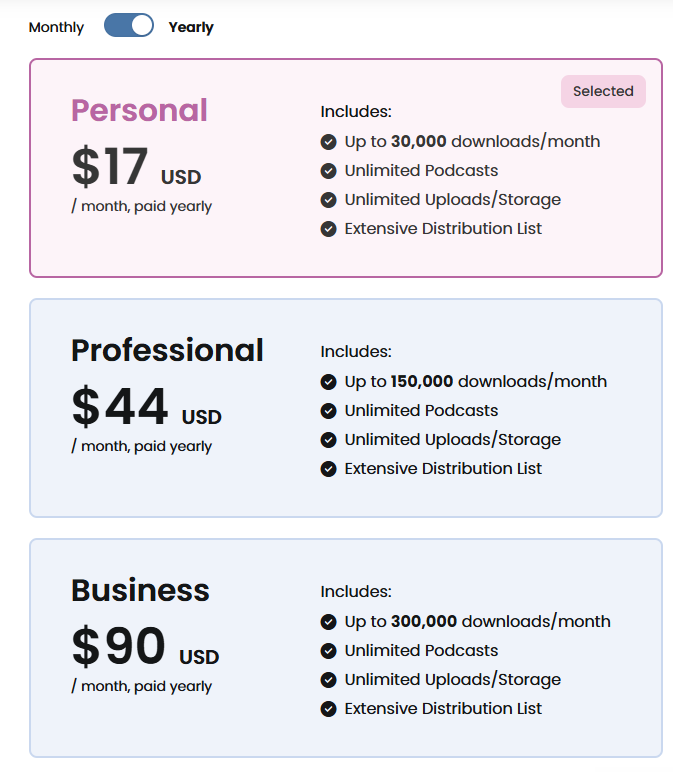
Captivate. Its $17 Personal plan, billed yearly, ships dynamic content insertion through the AMIE tool on every tier, alongside unlimited shows, unlimited uploads, a website builder, and 30,000 downloads a month. You drop your own pre-roll, mid-roll, and post-roll spots into the whole catalog and swap them whenever you like. Buzzsprout’s own Dynamic Content tool does pre-roll, mid-roll, and post-roll too, so insertion by itself is not the reason to switch. Unlimited shows and unlimited uploads on the same $17 plan are.
The value is that nothing is fenced off by tier. On Captivate you pay for downloads, never to unlock a feature, which is the opposite of climbing a plan ladder to reach ad tools. A monetizing show gets IAB-certified analytics, private podcasting, and insertion at $17 rather than reaching for an enterprise plan somewhere else. The catch worth saying out loud: the friendly $17 assumes annual billing, and there is no free-forever plan, only a 30-day trial. Want to pay month to month with zero commitment and this is not your host.
Pick Captivate if you want to run inserted ads and get every feature on the cheapest plan. Start a free Captivate trial.
What is the cheapest Buzzsprout alternative?
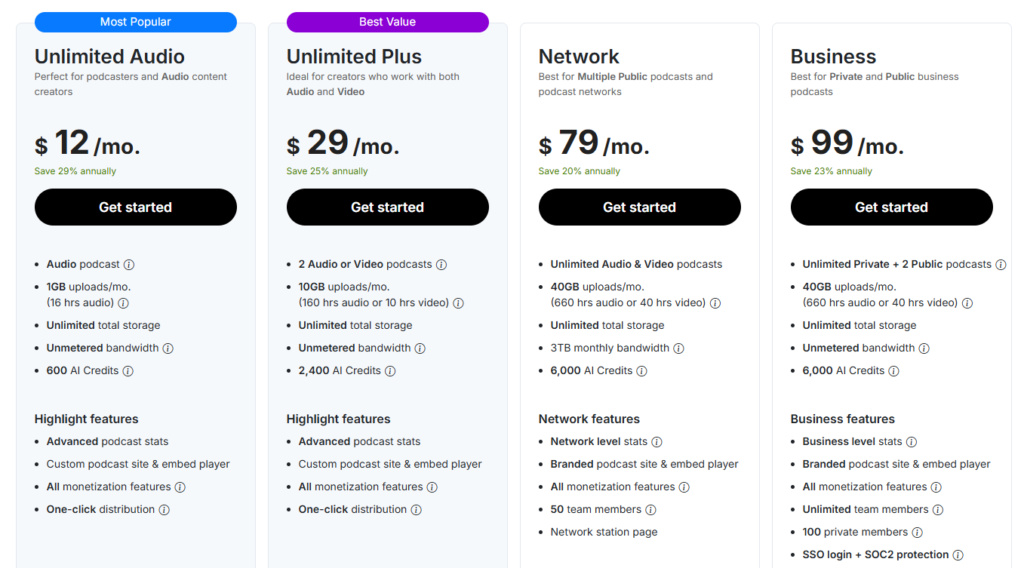
Podbean, if you are paying at all. The Unlimited Audio plan is $12 a month billed yearly, or $17 month to month, and it comes with unlimited total storage and unmetered bandwidth. That undercuts Buzzsprout’s $15 Audio plan while handing you far more room, which matters most if the 6-hour Buzzsprout cap is what pushed you out. There is a free tier below that, and dynamic ad insertion is available too through its self-serve PodAds tool, though it carries a $1 CPM fee, a dollar per thousand impressions served.
One number to read carefully. Unlimited Audio gives unlimited total storage but meters new uploads at about 1GB a month, which is roughly 16 hours of audio, so it is genuinely roomy for a daily or long-form show without being truly infinite month to month. The real tradeoff is polish. The interface feels older and busier than Buzzsprout’s clean setup, and the analytics look functional rather than lovely. You are trading a bit of shine for real savings and a lot more space.
Pick Podbean if you want the lowest paid price and the most storage per dollar. See Podbean’s plans.
Can you leave Buzzsprout for a free host and still make money?
Yes, and Acast is the one built for it. The Starter plan is free with no expiry, distributes to every major app, and includes a basic website and analytics. The pull is the marketplace: open your show to advertising and Acast places sponsors against your episodes, which unlocks unlimited episodes on the otherwise free tier and can turn into real ad money as you grow. Full dynamic ad insertion and sponsorship tools arrive on the Essential plan at about €14.99 a month billed yearly.
Read the free tier honestly before you switch. Starter caps you at 5 episodes until you join the marketplace, and the paid Essential tier runs €14.99 a month billed yearly, or €25 month to month. The full head-to-head is in Acast vs Buzzsprout. Marketplace revenue also tracks your download numbers, so a brand-new show will not see much at first. Still, for someone leaving Buzzsprout’s paid plan to stop paying, with a real path back to ad income later, this is the most natural landing spot on the list.
Pick Acast if you want a free start with a genuine route to ad revenue. Explore Acast.
So which Buzzsprout alternative should you pick?
Running more than one show? Transistor. Unlimited podcasts on one $19 bill, each with its own feed and site. Start a Transistor trial. The downside: no free plan, and ad insertion waits until the $49 tier.
Want to insert your own ads? Captivate. Dynamic insertion plus every feature on the $17 Personal plan. Start a free Captivate trial. The downside: that price needs annual billing, and there is no free tier.
Cutting cost, or out of upload hours? Podbean at $12 a month billed yearly, unlimited storage, unmetered bandwidth. See Podbean’s plans. The downside: the interface shows its age.
Want to start free and monetize later? Acast. Free Starter, marketplace ad money as you grow. Explore Acast. The downside: the free tier stops at 5 episodes until the marketplace carries you.
Still deciding between the closest paid calls? The Transistor versus Captivate comparison settles the two-show-versus-ad-insertion question, and the Buzzsprout plan ladder lays out exactly what you would be leaving. New to the whole decision, start with the best podcast hosts for beginners, and if the move itself worries you, read how a migration actually runs.
FAQ
What is the best alternative to Buzzsprout? It depends on why you are leaving. Transistor is the best switch for anyone running more than one show, since it hosts unlimited podcasts on one bill. Captivate wins if you want ad insertion, Podbean is cheapest, and Acast lets you start free.
Is there a cheaper podcast host than Buzzsprout? Yes. Podbean’s Unlimited Audio plan is $12 a month billed yearly, under Buzzsprout’s $15 Audio plan, and it adds unlimited storage. Acast has a free Starter tier, and Podbean offers a free plan too, though free tiers come with episode or storage limits.
Which Buzzsprout alternative lets you run multiple shows? Transistor and Captivate both host unlimited shows on one account, unlike Buzzsprout’s single-show Audio plan. Buzzsprout’s own answer is the $30 Multi-Podcast plan for 5 to 10 shows, but Transistor’s $19 Starter already carries unlimited shows for less.
Which alternative has dynamic ad insertion? Captivate, on every plan including the $17 Personal tier, through its AMIE tool. Podbean and Acast also offer insertion, Podbean through its self-serve PodAds tool at about $1 CPM and Acast from the Essential plan. Buzzsprout has it too, through its Dynamic Content tool, so insertion alone is not a reason to leave.
Coming from Libsyn, how hard is the switch? Not hard. Import your back catalog into the new host from your Libsyn RSS feed, confirm every episode landed, then set a 301 redirect on the Libsyn feed so apps follow you over. You gain a cleaner dashboard and modern analytics that Libsyn’s older interface never matched. You lose nothing on the listener side as long as the redirect is set before you close the old account. The full head-to-head is in Libsyn vs Buzzsprout, and if Buzzsprout is not where you want to land, Libsyn alternatives covers the rest of the field.
Coming from Anchor or Spotify for Creators, can I move to a paid host? Yes. There is no export file, so your new host pulls every episode straight from your Spotify RSS feed, then you flip the redirect inside Spotify for Creators from a desktop browser. You gain real feed ownership and analytics the free dashboard never offered. You lose the free ride, since paid hosts start around $12 to $19 a month. The full side-by-side on that trade is in Spotify for Creators vs Buzzsprout.