What Is Private Podcasting (and Who Needs It)?
Last updated: September 2026
Private podcasting is a show delivered through a feed only specific, authorized people can access, instead of a public feed anyone can find. Each subscriber gets their own unique feed link tied to their access. It powers three things: paid premium content, internal company communication, and courses or memberships. If you sell audio or need to reach a closed group, this is the feature you are looking for.
How does private podcasting work?
A public podcast has one feed everyone shares. A private podcast flips that: the host generates a unique, authenticated feed URL for each approved listener, so access can be granted, tracked, and revoked per person.
The listener experience stays familiar. They get a private link, add it to a normal podcast app like Apple Podcasts or Pocket Casts through a one-tap process, and it plays like any other show, just one nobody else can see. Behind the scenes, the host is checking that the feed token is valid before serving audio, which is what keeps it closed.
Because each feed is unique to a person, the host can do things a public feed cannot. Cut off access when someone cancels a membership or leaves a company. See who is actually listening. Cap how many people hold a feed. That per-subscriber control is the whole point, and it is why real private podcasting is a hosting feature, not something you fake by keeping a public show unlisted. An unlisted public feed is still one shared link anyone can pass around. A private feed is genuinely per-person. Which hosts do this well is covered in the best podcast host for a private or internal podcast.
Who needs a private podcast?
Three groups, and they look different but use the same machinery.
Creators selling premium audio: bonus episodes, ad-free versions, early access, a members-only show. You put it behind a private feed and charge for the link, often through a membership platform that hands out feeds automatically. It is one of the cleaner monetization paths, because the listener is paying for access rather than for an ad break.
Companies and teams: internal updates, onboarding, training, all-hands audio for a distributed workforce. People retain audio they listen to on a commute better than another video call, and a private feed keeps confidential material inside the company. Employees subscribe with their own feed and access ends when they leave.
Course creators and communities: cohort-based courses, coaching programs, paid communities. Audio lessons delivered to a private feed feel more premium than a file dump and let the creator see engagement. If your business is teaching or community, this turns audio into a real deliverable rather than a bonus.
If none of those are you, you do not need private podcasting, and paying a tier to get it is wasted. Be honest about which group you are in before you weigh it in a host decision.
Do you need a special host for private podcasting?
You need one that genuinely supports it, and not all do, so it is worth checking before you commit. The features that separate real private podcasting from a bolt-on: unique per-subscriber feeds, the ability to revoke access, a member cap that fits your plan, and clean integration with whatever membership or payment tool you use.
Some hosts include private podcasting on their standard plans, others gate it to a business tier, and a few do not offer it at all. That gate changes the real cost of the host once a private feed is part of your plan, the same way dynamic ad insertion does.
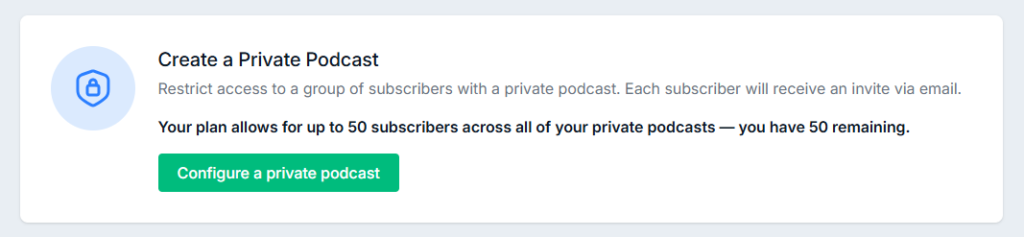
Compare the caps at the tier you will actually sit on, because the sticker price tells you almost nothing. Transistor builds a unique private feed per subscriber and includes private podcasting on its $19 Starter plan, capped at 50 people. Castos charges the same $19 and allows 100. One tier up it reverses: the $49 Transistor plan carries 500 private subscribers where Castos carries 250. Captivate works differently. Private podcasting comes on every plan at no extra cost, and Captivate’s own announcement puts the allowance at 50,000 subscribers across up to 100 private shows, from $19 a month ($17 billed yearly).
So size decides it. A small group that will stay small gets the most room per dollar on Castos. A feed you expect to reach thousands belongs on Captivate, because no other host here covers that on its entry plan. In between, Transistor is our pick for its per-subscriber management, which is why we tell most people running private feeds not to leave it, in Transistor alternatives.
The practical advice: if a private feed is core to your plan rather than a maybe, make it a hard requirement when choosing a host, not an afterthought. Retrofitting it later means either a migration or paying up a tier you did not budget for. If you are still at the start of that decision, begin with what a podcast host actually does.
FAQ
What is a private podcast? A show delivered through feeds only authorized people can access, with a unique feed link per subscriber. It is used for premium content, internal company audio, and courses.
How is a private podcast different from an unlisted one? An unlisted public podcast is still one shared feed anyone with the link can use. A private podcast gives each person a unique, authenticated feed that can be tracked and revoked.
Can I make money with a private podcast? Yes. Selling access to bonus or ad-free episodes through a private feed is a common monetization path, usually run through a membership platform that distributes feeds automatically.
Do all podcast hosts support private podcasting? No. Some include it on standard plans, some gate it to a business tier, and a few do not offer it. Confirm real per-subscriber private feeds before choosing a host for this.
This post contains affiliate links, and we may earn a commission if you sign up through them, at no cost to you. See our Affiliate Disclosure. Pricing as of August 2026.