Best Podcast Host for a Private or Internal Podcast (2026)
Last updated: September 2026
If you need to host a private or internal podcast, whether that is employee training, a paid membership feed, or course audio, Transistor is the host to use for any feed that will grow. One caveat matters at the bottom end. At $19 a month Castos gives you 100 private subscribers where Transistor gives you 50, so a small feed that is staying small gets more room there for the same money. Above a couple of hundred people Transistor pulls away from Castos, and Captivate goes furthest of all, with up to 50,000 private subscribers in total on every plan. It also builds a unique private feed for every subscriber, so you always know who is listening. Not sure you need any of this? Start with what private podcasting is and who it is for.
The best podcast host for a private or internal podcast: Transistor
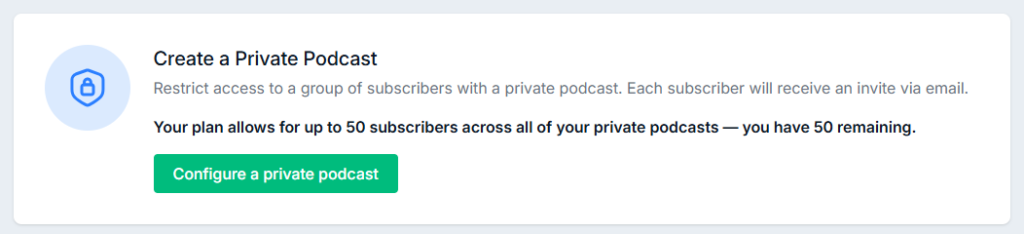
Transistor treats private podcasting as a real feature, not a bolt-on. When you add a subscriber, it generates a private RSS feed unique to that person, which they load into Apple Podcasts, Pocket Casts, Overcast, or most other apps. Because every feed is one-to-one, you can see exactly who subscribed and who is actually listening, which is the entire point of an internal or paid feed. You add people by hand, by CSV upload, through an invite link, or automatically with Zapier.
Why Transistor wins for private podcasting
The per-subscriber feed is the thing most hosts get wrong, and Transistor gets right. One feed per person means you can track access and pull it when someone leaves, which matters for an employee podcast or a paid membership. Subscriber management is genuinely easy, with manual adds, CSV import, invite links, and Zapier for automation.
Companies use it for onboarding, ongoing training, and internal updates, and creators use it to run a paid feed as an alternative to Patreon or Supercast. Churches and nonprofits land here too, for members-only feeds and paid training, which is its own set of trade-offs. Because Transistor gives you unlimited shows on every plan, your private feed and your public show can live in the same account for one price.
How many private subscribers do you get, and what does it cost?
The lever here is subscriber count, and it maps straight to the plan:
- Starter, $19/mo: up to 50 private subscribers
- Professional, $49/mo: up to 500 private subscribers
- Business, $99/mo: up to 3,000 private subscribers
So you pick your tier by how many people get the feed, not by which features you need. Full plan breakdown is in our Transistor pricing guide.
Is there a cheaper host for a small private feed?
Yes, if the feed stays small. Castos Essentials costs the same $19 a month and includes up to 100 private subscribers with unlimited downloads. Transistor Starter stops at 50 and meters you at 20,000 downloads a month. For a pilot cohort, a small internal feed, or a membership you are still building, that is double the room for identical money and no download ceiling to watch.
Then it flips, and not gently. Transistor Professional at $49 carries 500 private subscribers against the 250 on Castos Growth. At $99 it is 3,000 against 500. Six times the headroom at the top tier settles it: if you expect to pass a couple of hundred subscribers, start on Transistor and skip the migration you would otherwise be doing next year. Castos is here if you are confident you are staying under 100. Pricing as of August 2026.
Runner-up: Captivate, and when it is the better call
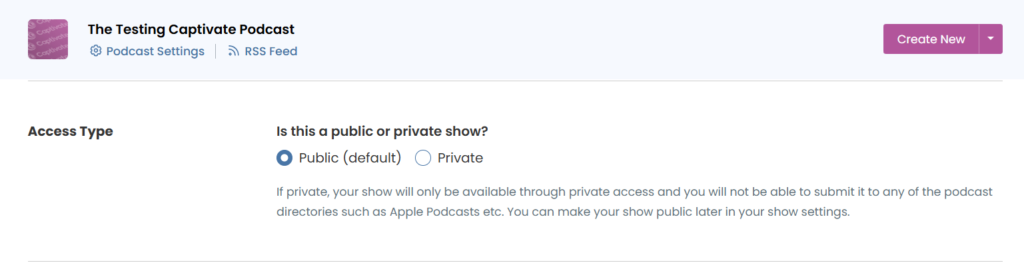
Captivate also includes private podcasting on every plan, starting at $17 a month, so it is a real alternative, especially if you want its growth and analytics tools sitting alongside the private feed. The reason Transistor still leads for a pure private or internal use case is the cleaner per-feed tracking and subscriber management.
Still torn? Here are Transistor and Captivate compared in full.
What to look for in a host for a private podcast
- A unique feed per subscriber, so you can track and revoke access
- Easy ways to add and remove people, by CSV, invite link, Zapier, or an API
- Subscriber caps that fit your actual audience size
- Compatibility with the normal podcast apps, so listeners are not stuck in a clunky player
- A paid or membership option if you plan to charge for the feed
Check any host against that list before you commit.
Verdict
For a private or internal podcast, Transistor is the pick, provided the feed has somewhere to grow. Real per-subscriber feeds, simple subscriber management, and private podcasting on the $19 plan make it the straightforward choice. Know for certain you are staying under 100 subscribers? The Castos entry plan costs the same $19 and doubles Transistor’s 50-subscriber allowance. Expecting thousands of listeners? Captivate includes up to 50,000 private subscribers in total on every plan.
Start a free Transistor trial.
The honest downsides: the subscriber caps push you up the tiers as your audience grows, and there is no free-forever plan. But, if you’re charging a fee to listen, a rapidly growing audience likely takes care of any worries about bumping up to the $49/month level.
FAQ
Can you host a private podcast on Transistor? Yes. Every plan includes private podcasting, with a unique private RSS feed generated for each subscriber.
How many private subscribers does Transistor allow? 50 on the $19 Starter plan, 500 on Professional, and 3,000 on Business.
Is Castos or Transistor cheaper for a private podcast? At $19 they cost the same, and Castos allows 100 private subscribers to Transistor 50. At the $49 and $99 tiers Transistor allows far more, 500 and 3,000 against 250 and 500.
How do listeners access a private podcast? Each subscriber gets a private feed they add to Apple Podcasts, Pocket Casts, Overcast, and most other apps.
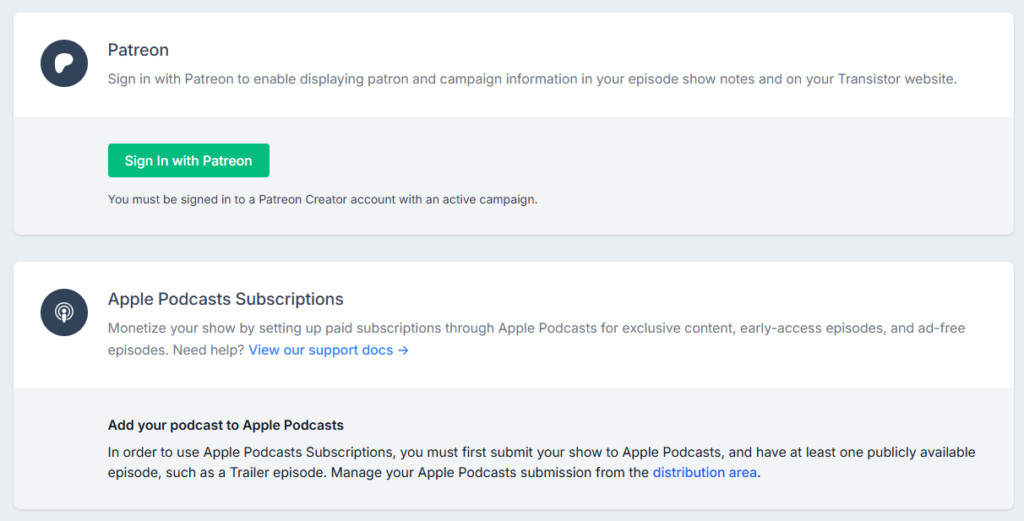
Can you charge for a private podcast? Yes. You can run a paid private feed on Transistor, connecting your own payment or membership tool, as an alternative to Patreon or Supercast.
This post contains affiliate links, and we may earn a commission if you sign up through them, at no cost to you. See our Affiliate Disclosure. Pricing as of August 2026.