What Is Dynamic Ad Insertion (and Do You Need It)?
Last updated: September 2026
Plan tiers and prices verified July 2026.
Dynamic ad insertion, or DAI, is a hosting feature that slots ads into your episodes at playback time instead of baking them into the audio file forever. The ad you hear today can be swapped, updated, or pulled tomorrow, on old episodes too. You need it if you plan to run sponsorships at any scale. You can skip it if you never will.
How does dynamic ad insertion work?
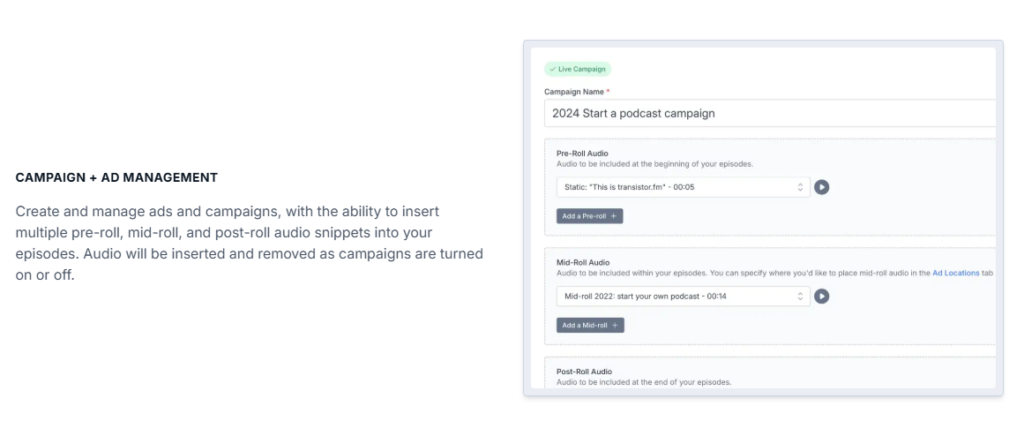
Your host marks spots in the episode where an ad can go: a pre-roll before the content, a mid-roll somewhere in the middle, a post-roll at the end. These are markers, not audio. The actual ad is stitched in the moment a listener presses play.
So the file people download is assembled on demand. Same episode, two listeners, two different ads, maybe none at all for a third. That is the “dynamic” part. Hosts describe the same mechanic in their own words, for example Captivate, which includes insertion on every plan. It stands opposite to a baked-in ad, where you record the sponsor read into the episode itself and it lives there permanently, in every download, until the file is deleted.
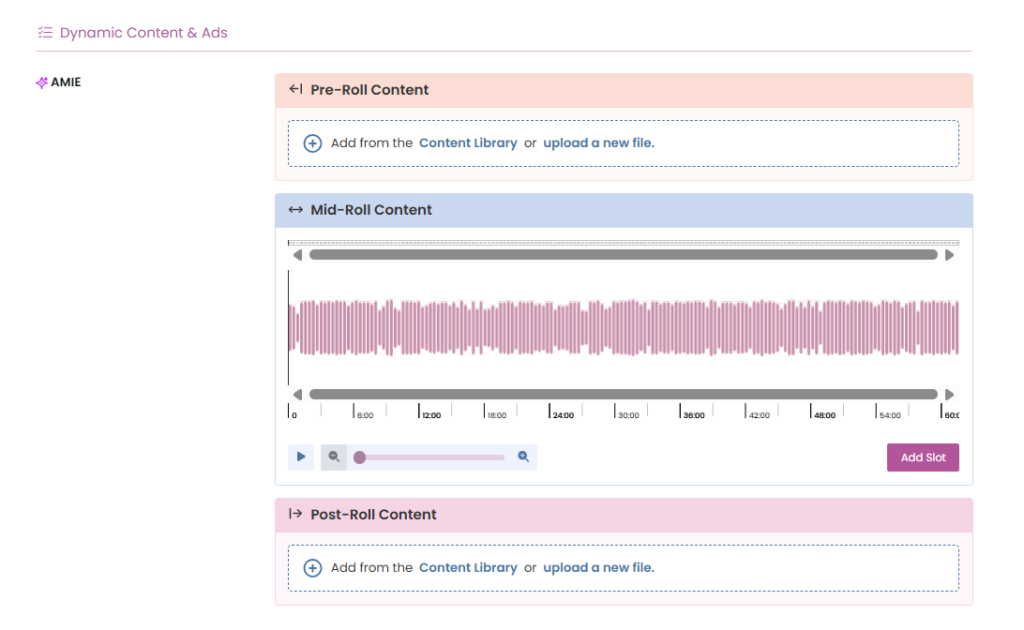
The practical win is your back catalog. With baked-in ads, a sponsor read from two years ago still plays, long after the deal ended and the promo code died. With DAI you can run a fresh campaign across every old episode at once, then swap it when the deal changes. Your entire library becomes ad inventory you can update from one dashboard.
Baked-in vs dynamic ads: which is better?
Neither wins outright. They do different jobs, and plenty of shows run both.
Baked-in host reads are the ones listeners actually trust. The host talks about the product in their own voice, it is woven into the episode, and ad recall on these runs far higher than programmatic spots. The tradeoff is they are stuck in the file forever, and you cannot update them.
Dynamic ads trade a little of that intimacy for control and reach. You get flexibility, you can monetize the whole back catalog, and you can plug into an ad marketplace that fills your inventory for you. The cost is that a machine-inserted spot converts worse than a genuine host read, and a clumsy mid-roll can jar a listener. The real answer for a growing show is usually both: host-read baked-in for your anchor sponsor, DAI for everything else. That split has a price tag attached, since host reads and inserted ads pay very differently, which is laid out in podcast CPM and ad rates explained.
For the spots you produce yourself, an AI voice generator can read the copy you re-cut every month, though check the sponsor’s contract first, since some deals require a real host read.
Do you actually need dynamic ad insertion?
Be honest about where your show is. If you have no sponsors and no near-term plan to chase them, DAI is a feature you will not touch, and paying up a tier to get it is wasted money. Bank that. Focus on episodes and downloads first.
If you do plan to monetize, you want it, and you want to know which tier unlocks it. Insertion is one route among several, laid out in how podcasts actually make money. Some hosts include DAI on entry plans. Others gate it behind a mid or top tier, which changes the real cost of the host once ads are your plan. Captivate, for one, ships ad insertion on every plan rather than making you climb for it. If DAI is a near-term need, that gate matters more than the sticker price.
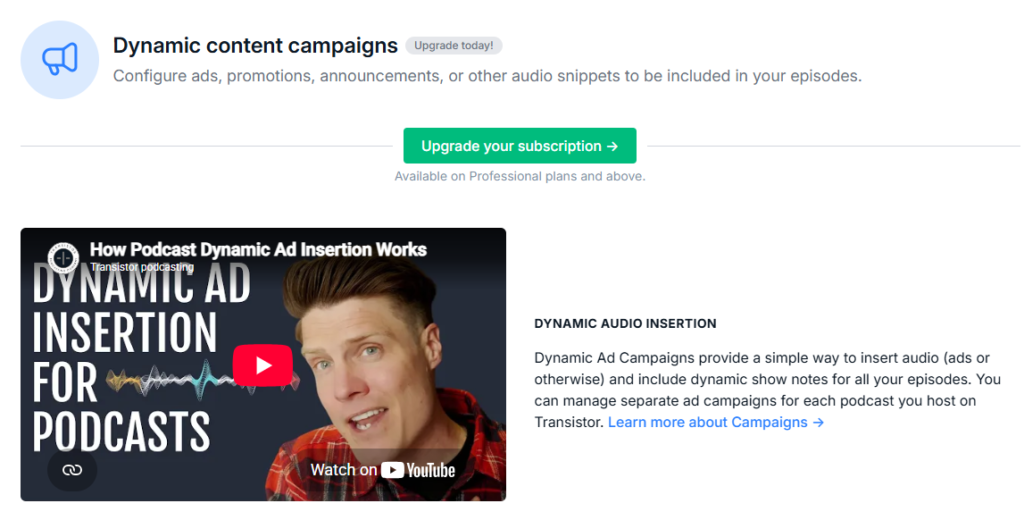
Transistor is the clean example of the other approach. The dynamic content tool shows up in the dashboard on every plan, but it is a locked door. Insertion does not switch on until the $49 Professional tier, more than double the $19 Starter price, and that is a real cost if ads are the reason you are choosing a host at all. If those two are your finalists, here is how Transistor and Captivate compare on ad insertion.
Which hosts unlock dynamic ad insertion, and at what tier?
Here is where the gate sits on the hosts most new shows actually consider, checked against their live pricing pages in August 2026.
| Host | Cheapest plan with DAI | Price | The catch |
|---|---|---|---|
| Podbean | Unlimited Audio | $12/mo billed yearly | $1 CPM on every ad it serves, on top of the plan, and switched off across Europe since March 2026 |
| Buzzsprout | Audio | $15/mo billed yearly | Picks your mid-roll spots for you unless you place them |
| Captivate | Personal | $17/mo billed yearly | Annual billing for that price, and no free tier |
| Transistor | Professional | $49/mo | Nothing on the $19 Starter plan |
| Spotify for Creators | Partner Program | Free | Needs 3 episodes, 2,000 hours listened, and an audience of 1,000 in 30 days |
The full breakdown, including what each of those tools can and cannot actually do, is in the cheapest podcast host with dynamic ad insertion comparison.
One caveat worth stating plainly. DAI does not create demand. It gives you the machinery to run and manage ads, but you still need either an ad marketplace filling your inventory or your own sponsor deals. The feature is the pipe, not the water.
Does dynamic ad insertion work in video podcasts?
It does on Apple Podcasts now, and the honest answer for most shows is that it changes nothing yet. Apple announced its HLS video format on February 16, 2026, and said in the same breath that creators would be able to dynamically insert video ads, host-read spots included, into video episodes. Apple also said it would charge participating ad networks an impression-based fee for delivering those ads.
Read that last sentence carefully, because the fee lands on ad networks, not on you and not on your host. The thing that actually gates you is how narrow the on-ramp is. Video DAI went live through four ad networks: Acast, Amazon’s ART19, Triton’s Omny Studio, and SiriusXM, which covers SiriusXM Media, AdsWizz, and Simplecast. If your show is not represented by one of those, the feature is not available to you no matter which host you pay.
That is a different list from the hosts that can publish video to Apple at all, and the overlap is where the confusion starts. Buzzsprout, Captivate, and Podbean can put your video on Apple Podcasts today. Publishing video and selling dynamic ads against it are two separate capabilities, and the second one runs through the ad networks above rather than through the host you pay each month. If you sell your own sponsorships, nothing here changes your plan: bake the read into the video cut, or keep running audio DAI the way you already do. The best podcast hosts for video covers what publishing video actually costs.
FAQ
How many downloads do you need before dynamic ad insertion is worth turning on?
Enough to have a sponsor, which is the part people skip past. If you sell your own ads, there is no threshold at all: one direct deal and the feature has already paid for itself, even on a few hundred downloads an episode. If you are waiting on a marketplace to fill the slot for you, the bar is real. Spotify’s Partner Program wants at least 3 episodes, 2,000 consumption hours, and an audience of 1,000 on Spotify in the last 30 days before ads switch on, and the bigger ad networks want considerably more than that. Turn DAI on when you have someone to put in the slot, not in the hope that having the slot conjures someone.
Does dynamic ad insertion mess up my download numbers?
No. A listener still requests one file, so you get one download counted whether an ad was stitched into it or not. Ad impressions are tracked separately from downloads, and insertion happens server-side on that same request, so an IAB-certified host counts it exactly the way it did before. The number that does move is impressions, because a back-catalog campaign starts serving ads on episodes that were previously earning nothing. Downloads flat, impressions climbing, is the normal shape.
Do dynamic ads break the timestamps in my show notes?
Everything after the insertion point, yes. Drop a 60-second mid-roll in at 12:00 and every chapter marker below it is now 60 seconds off. The part that catches people out is that some hosts choose the spot for you. Buzzsprout scans any episode longer than 23 minutes and picks placement automatically unless you go set it yourself, so the ad can land somewhere you did not plan. If you publish timestamped notes or chapters, place your mid-rolls by hand first, then write the notes against the assembled episode.
What happens to my dynamic ads if I switch podcast hosts?
They do not come with you. Your RSS feed carries episodes and metadata, not ad campaigns, so the insertion markers, the campaign schedules, and the ad audio all stay behind in the old dashboard. A migration moves your show and your subscribers. It does not move your ad setup, and you rebuild every campaign by hand on the other side. That is the quiet lock-in cost of DAI, and it is worth knowing before you build two years of ad inventory somewhere you might want to leave.
Can listeners skip a dynamically inserted ad?
Yes. Once the file is assembled it is ordinary audio, so scrubbing past a pre-roll works like skipping anything else, and no host can force playback. That is the practical argument for putting a mid-roll at a genuine break rather than dropping it into the middle of a sentence, where it earns you a skip and a bit of resentment.
Do all podcast hosts have dynamic ad insertion?
No. Some include it on every plan, some lock it to higher tiers, and a few do not offer it at all. Check which tier it unlocks before choosing a host to monetize. We have looked into which hosts have it and which option is the most affordable.