Podcast CPM and Ad Rates Explained (2026)
Last updated: August 2026
CPM means cost per mille, the price an advertiser pays per 1,000 downloads of an ad. In 2026, host-read ads on mid-size shows run roughly $25 to $50 CPM, high-value niches reach $40 to $65, and programmatic or dynamically inserted ads sit lower, between about $8 and $30 depending on the source. Multiply the CPM by your downloads in thousands, per ad slot, and you have your episode’s rough ad value. The details decide how close you get to the high end.
What is a good podcast CPM rate?
Context sets “good,” and the first honest thing to say is that published 2026 ranges disagree with each other, so treat any single number you see as one source’s read rather than a rate card. Across current industry guides, host-read placements, where you personally endorse the product, pull the most: roughly $25 to $50 CPM for a mid-tier show, with high-value niches like B2B tech, business, and personal finance reaching into the $40 to $65 range.
Some ad-buying sources quote lower, nearer $15 to $30, so the middle of that spread is the safe planning number. Programmatic and dynamically inserted ads, filled by a marketplace rather than sold by you, run cheaper across every source, somewhere between $8 and $30 depending on whose data you read, with run-of-network inventory at the bottom of that band.
One correction worth making, because the intuition runs the other way: the biggest shows do not command the highest CPM. Rates tend to fall per thousand as a show scales, because large inventory sells in volume at a discount, and the very biggest titles often stop quoting CPM altogether and sell flat-rate placements instead. A $10 to $25 CPM on a show doing 500,000 downloads is a much bigger check than a $50 CPM on a show doing 5,000.
The reason for the gap is performance, not snobbery. A host read in the creator’s own voice earns far higher ad recall than a machine-inserted spot, so advertisers pay up for it. That is also why a smaller show with a genuine, trusted host can out-earn a bigger show running only programmatic fills.
One number to hold loosely: a niche show with a valuable audience can command a premium CPM that has nothing to do with size. A B2B show reaching decision-makers can charge rates a general-interest show its size never could. Fit beats scale on price.
How do you calculate podcast ad revenue?
The formula is simple. The inputs are where people fool themselves. Revenue per ad slot equals your per-episode downloads, divided by 1,000, times the CPM, which makes what counts as a podcast download the number the whole calculation rests on. For the size a buyer will actually take a call about, see how many downloads you need to get a sponsor.
Say an episode gets 4,000 downloads and you run one mid-roll at a $25 CPM. That is 4 times $25, so $100 for that slot on that episode. Run a pre-roll and a mid-roll and you roughly double it. Because episodes keep getting downloaded for weeks, dynamic ads earn on the back catalog too, not just the new release, which is the quiet advantage of dynamic ad insertion.
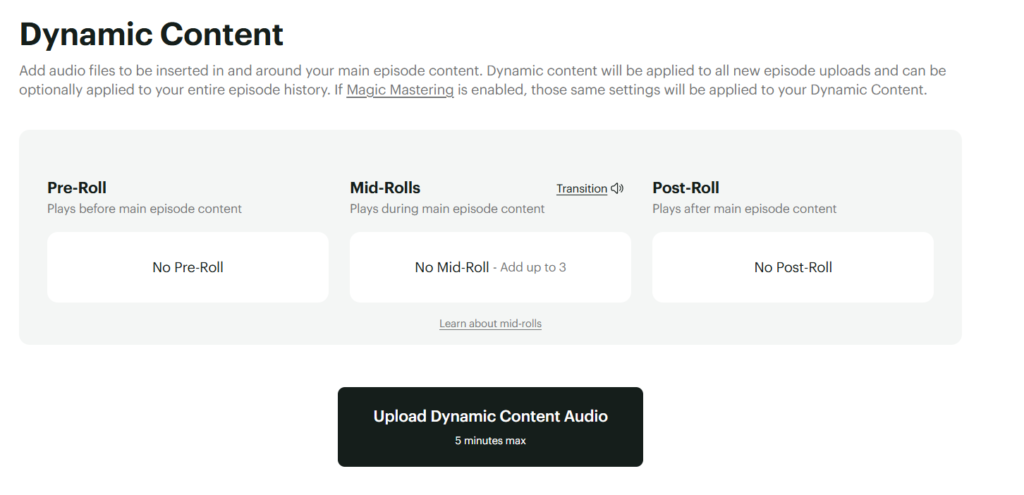
Two honest adjustments. First, use your real IAB-standard downloads, not a vanity number, because that is what a sponsor pays against. Second, a marketplace or agency takes a cut, often 30 percent or so, so your take-home is below the gross. Model the net, not the headline.
Do pre-roll, mid-roll, and post-roll ads pay differently?
Yes, and the order reflects attention. Mid-roll is the premium slot, because a listener who is halfway through an episode is engaged and unlikely to skip, so advertisers pay the most for it. Pre-roll sits in the middle: high completion since it plays before the content, but easy to tune out. Post-roll is the cheapest, because plenty of listeners drop off before the end.
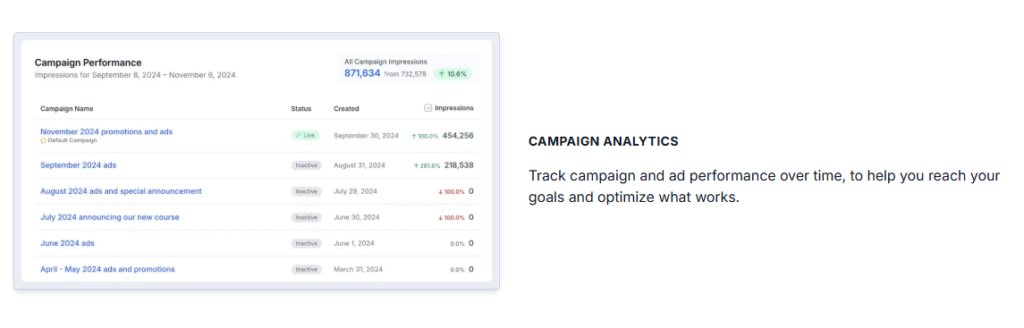
For a creator this shapes strategy. If you run one ad, a mid-roll usually earns the most. If you run several, sequence them by value and do not stack so many that you bury the episode. Listeners tolerate ads that feel earned and bail on shows that feel like ad-delivery vehicles. Running any of this well depends on your host having the ad tools on-plan rather than locked behind a custom quote, which is worth checking before you sell your first spot.
What should you charge if you’re under about 3,000 downloads?
Charge a flat rate per spot, not a CPM. Below roughly 3,000 downloads an episode, the CPM formula produces numbers too low to bother quoting, so you price the audience instead of the volume. Real rate cards at that size run as packages: a show at 500 to 1,000 downloads asking around $600 a month for two episodes, and one at 1,000 to 3,000 downloads around $1,200 a month for four. Both work out near $300 a slot, well above what a CPM would spit out at that size.
The lever is niche. A show with 600 tightly targeted listeners can out-earn a general show with ten times the downloads, because a sponsor selling to that exact audience is paying for fit. Then stack add-ons on top. A newsletter mention runs $150 to $300, category exclusivity 40 to 60 percent of your base rate, a social push $100 to $200. Once you clear about 3,000 downloads, CPM math starts producing spot prices worth naming, and you can switch to it. Your host decides how easily you can place those spots, which is covered in the best podcast host for monetization.
That newsletter mention only pays if you actually have a list. If you do not yet, the newsletter platforms worth using is the place to start.
FAQ
What does CPM mean in podcasting? CPM is cost per mille, the amount an advertiser pays per 1,000 downloads of an ad. A $25 CPM means $25 for every 1,000 downloads that hear that spot.
How much do podcasts charge for ads? In 2026, host-read ads on mid-size shows run about $25 to $50 CPM, high-value niches $40 to $65, and programmatic or dynamically inserted ads roughly $8 to $30. Very large shows often earn a lower CPM than mid-size ones, because big inventory sells at a volume discount.
How much can a podcast make per episode? Roughly downloads divided by 1,000, times CPM, per ad slot. A 4,000-download episode with one $25 mid-roll earns about $100, before any marketplace cut.
Which podcast ad slot pays the most? Mid-roll, because listeners who reach the middle of an episode are engaged and rarely skip. Pre-roll is next, and post-roll pays least due to drop-off.