Transistor vs Buzzsprout: Which Wins in 2026?
Last updated: September 2026
Get Transistor if you plan to run more than one show, want unlimited hosting, and care about clean analytics with no per-show fee.
Get Buzzsprout if this is your first podcast and you want the simplest possible start, including a genuine free plan. Both are good. They just win for different people.
Transistor vs Buzzsprout at a glance
| Transistor | Buzzsprout | |
|---|---|---|
| Entry price | $19/mo (Starter) | Free plan, paid from $15/mo (billed annually) |
| Shows per account | Unlimited on every plan | One per account, or a Multi-Podcast plan for 5 to 10 shows |
| Usage metering | Monthly downloads, 20,000 on Starter | Upload hours per month, downloads uncapped |
| Free plan | No, free trial only | Yes, 2 hours/mo, episodes hosted 90 days |
| Dynamic ad insertion | Yes, unlocks at the $49 Professional tier | Yes, Dynamic Content tool on paid plans |
| Built-in website | Yes, a separate site per show | Yes, one podcast site |
| Analytics | Advanced, follows IAB guidelines (not certified) | Advanced, IAB-certified |
| Migration | Free, assisted import | Free, easy import |
The single biggest difference is how they charge. Transistor meters you on downloads and lets you run as many shows as you want. Buzzsprout meters you on the hours of audio you upload each month and is built around one show. That one design choice decides most of this matchup.
Where Transistor wins
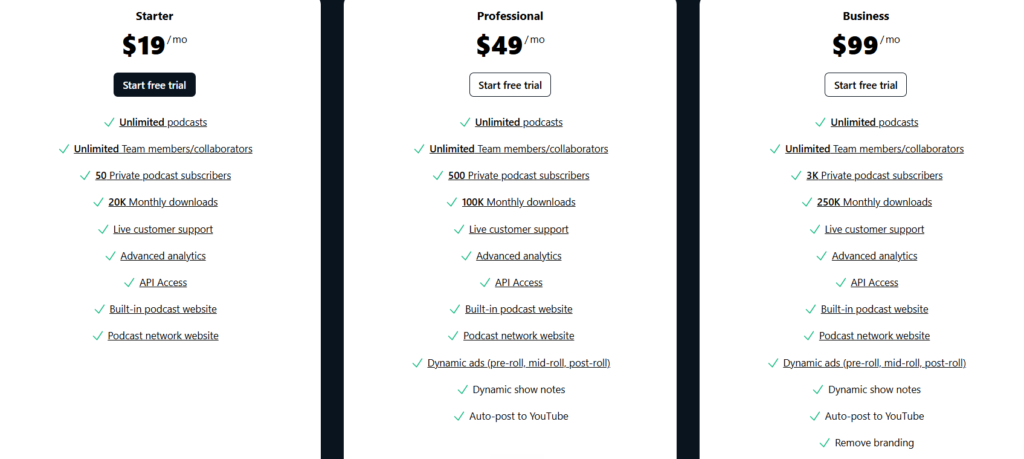
Transistor is the better host the moment you have, or expect, a second show. Every plan carries unlimited podcasts on one account and one bill, so a personal show, a company show, and a side project all live under the same $19 Starter subscription instead of three separate ones. Each show still gets its own RSS feed, its own website, and its own listing on Apple Podcasts and Spotify.
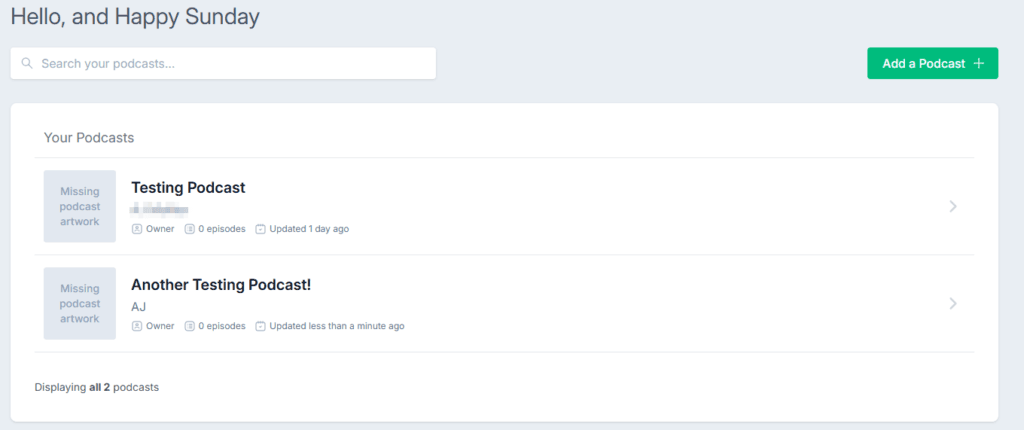
Beyond the multi-show pricing, Transistor throws in unlimited team members on every tier, so co-hosts and clients get their own logins at no extra cost. The analytics are clean and per-show, which matters once you are juggling more than one feed. If you are building anything that looks like a small network, this is the model you want. The honest catch: your download allowance is one shared pool across all shows, so a busy roster climbs the tiers on downloads even though the shows themselves are free. If a network is where you are headed, the full case is in the best host for running multiple shows.
Where Buzzsprout wins
Buzzsprout is the easiest on-ramp in podcasting, full stop. The dashboard is friendly, the upload flow is obvious, and the free plan lets you publish two hours of audio a month without paying anything, which is genuinely useful for testing whether you will even stick with the hobby. For a first-timer who wants to hit publish today and not think about download pools or tiers, that simplicity is worth a lot. It is why Buzzsprout takes the top spot in the best host for beginners.
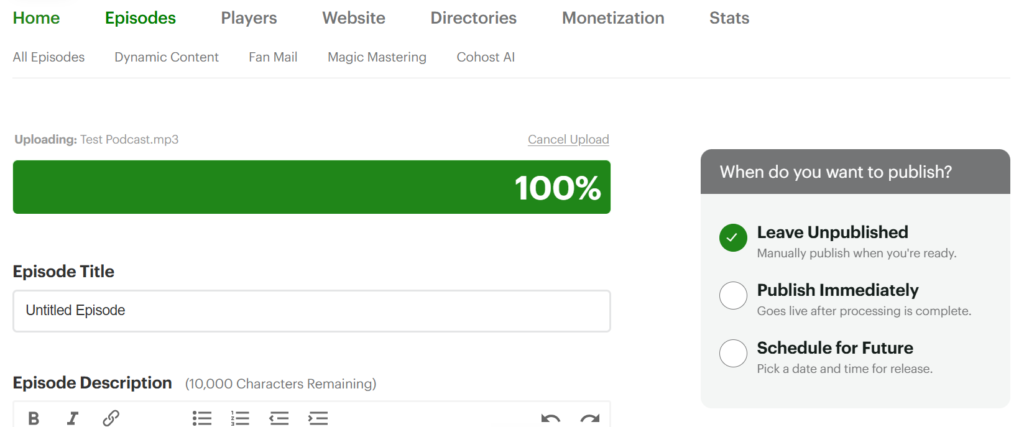
The brand also helps. Buzzsprout is one of the most-used hosts around, so nearly every “how do I start a podcast” tutorial, forum thread, and YouTube walkthrough already uses it, and support is fast and human. Automatic transcripts, a decent podcast website, and directory distribution come standard on the paid plans. The tradeoff is the ceiling. The hours-per-month metering and the one-show-per-account structure start to pinch the day you get serious or launch a second show.
Transistor vs Buzzsprout on price
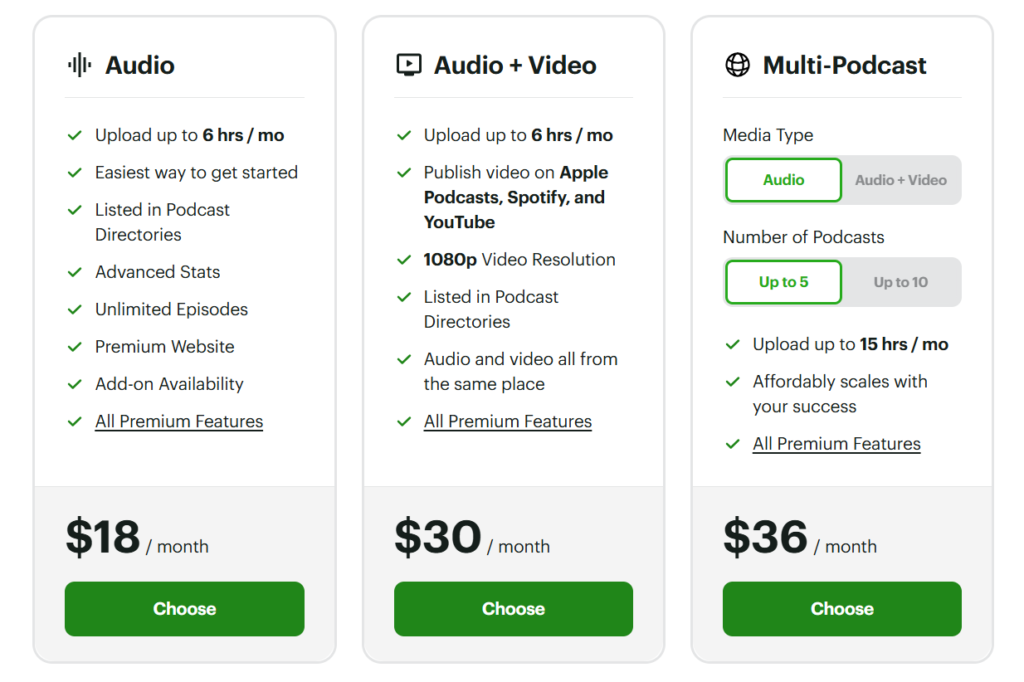
At the tier most people buy, the two are closer than the headline numbers suggest, but they measure different things. Transistor’s $19 Starter gives you unlimited shows and 20,000 downloads a month. Buzzsprout’s Audio plan is $15 a month billed annually, or $18 month-to-month, for 6 upload hours a month, gated by upload hours rather than downloads, so a low-output show with a big audience can stay cheap on Buzzsprout, while a prolific show with a small audience can stay cheap on Transistor.
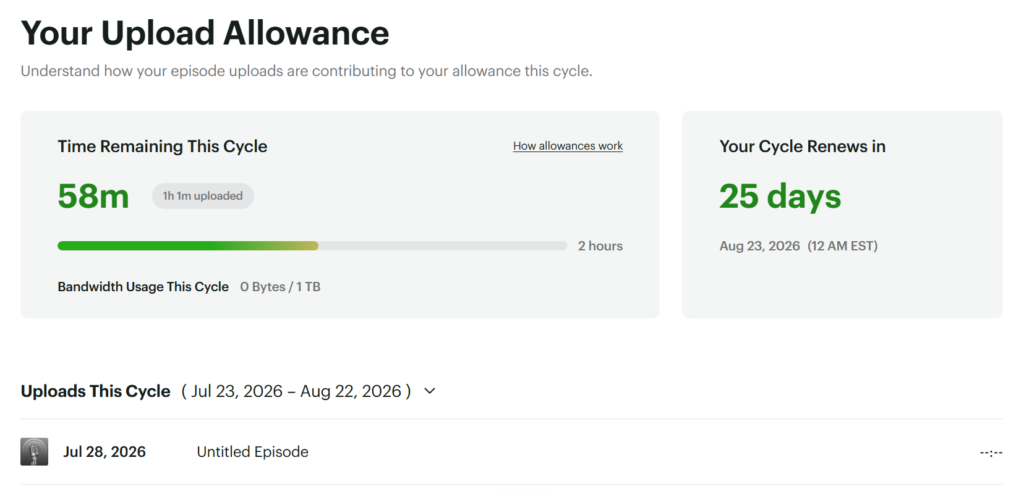
Two catches to know. On Transistor, dynamic ad insertion does not appear until the $49 Professional tier, so a monetizing creator pays more than the entry price. On Buzzsprout, your plan caps the hours of audio you can upload each month, and the free plan drops your episodes after 90 days, which is a real gotcha if you treat it as permanent hosting.
Which should you choose?
If you will run more than one show, want room to grow without per-show billing, and value tidy analytics, pick Transistor. If neither of these two fits, the wider field is in Buzzsprout alternatives by use-case, and the full decision framework is in how to choose a podcast host. Start a free Transistor trial. The full plan breakdown is in Transistor’s pricing guide. The honest downside: there is no free-forever plan, and dynamic ads sit behind the $49 tier.
If this is your first show and you want the gentlest, cheapest possible start, pick Buzzsprout. Try Buzzsprout. The honest downside: it is built for one show, so a second podcast means a second bill, and the free plan only hosts episodes for 90 days. We weigh whether Buzzsprout is worth it in full.
FAQ
Is Transistor or Buzzsprout better for beginners? Buzzsprout, on ease of use and its free plan. It is the simplest host to publish your first episode on. Transistor is the better long-term home if you expect more than one show.
Does Buzzsprout let you host multiple podcasts? Standard plans are one show per account. Buzzsprout offers a Multi-Podcast plan for 5 to 10 shows, but Transistor includes unlimited shows on every plan by default.
How do Transistor and Buzzsprout charge? Transistor meters monthly downloads and leaves your show count unlimited. Buzzsprout meters the hours of audio you upload each month and does not cap downloads.
Does either have a free plan? Buzzsprout has a free plan capped at two hours a month with 90-day episode hosting. Transistor has no free plan, only a free trial.
This post contains affiliate links, and we may earn a commission if you sign up through them, at no cost to you. See our Affiliate Disclosure. Pricing as of August 2026.