Acast vs Buzzsprout: Which Free-to-Start Host Wins?
Last updated: September 2026
This post contains affiliate links, and we may earn a commission if you sign up through them, at no cost to you. See our Affiliate Disclosure. Pricing as of August 2026.
Get Acast if you want a genuinely free start with a built-in path to ad money and you do not mind a busier, monetization-first dashboard. Get Buzzsprout if you want the smoothest first-timer experience and you are willing to pay a little for it. Both let you start without a bill. They just point you in different directions from day one. If ad money is the whole reason you are choosing, the field is wider than these two, and it is ranked in the best podcast host for monetization.
If Buzzsprout is the one you keep circling back to, the closer fight on features is Captivate versus Buzzsprout.
Acast vs Buzzsprout at a glance
| Acast | Buzzsprout | |
|---|---|---|
| Free way to start | Free Starter plan, ongoing | Free plan, ongoing |
| Free plan limits | 1 show, capped at 5 episodes until you join the ad marketplace | 2 upload hours/mo, episodes removed after 90 days |
| Card at signup | Yes, required even on the free tier | No |
| Entry paid plan | Essential, €14.99/mo billed yearly, or €25 month to month | Audio, $15/mo billed annually |
| Monetization | Ad marketplace built in, can unlock unlimited episodes | Affiliate marketplace and paid subscriptions, opt-in |
| Usage metering | Episode count on free tier, then unlimited | Upload hours, 6/mo on Audio, downloads uncapped |
| Built-in website | Yes | Yes |
| Support and UX | Functional, ad-focused | Fast human support, beginner-friendly |
| Migration | Free import | Free, easy import |
The core split is philosophy. Acast is free to start and wants you selling ads through its marketplace, which is how the free hosting eventually pays for itself. Buzzsprout is the friendliest place to publish your first episode and asks for a small monthly fee once you outgrow the limited free tier. One is monetize-first. The other is experience-first.
Where does Acast win?
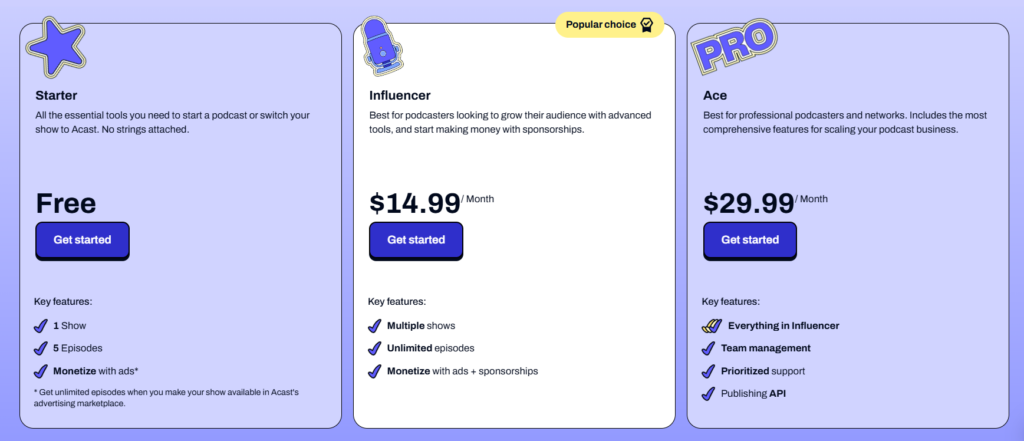
Acast wins if your plan is to make money from the show, not just pay to host it. The free Starter plan costs nothing on an ongoing basis, and once you put your show into Acast’s advertising marketplace, the 5-episode cap lifts and you can publish without limit. The pitch is simple. Instead of you paying Acast every month, ads running against your episodes can cover the cost and then some.
That marketplace is Acast’s whole identity. It is one of the largest podcast ad networks in the world, so a show with a real audience has a plausible route to dynamically inserted ads without chasing sponsors alone. Distribution to Apple Podcasts, Spotify, and every other app comes standard. The honest catch: the marketplace has an eligibility bar, and a second, higher bar before the ad dollars mean anything.
Acast’s own learning center sets the entry at 1,000 monthly listeners to apply, on any plan including the free one, and says revenue typically starts arriving nearer 5,000 listeners a month. So a brand-new show with a handful of downloads clears neither bar and is not going to fund itself right away. And the card requirement at signup, even on the free tier, catches some people off guard.
Where does Buzzsprout win?
Buzzsprout wins on the actual experience of starting a podcast. The dashboard is the friendliest in the category, the upload flow is obvious, and support is fast and staffed by real people who answer podcasting questions, not ticket-deflection bots. For a first-timer who wants to publish today and not think about ad marketplaces or eligibility tiers, that polish is worth paying for.
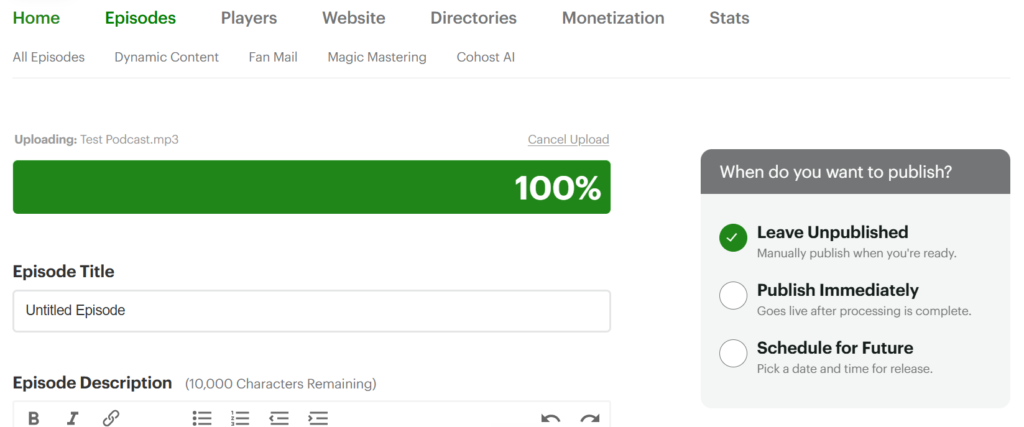
The free plan lets you publish two hours of audio a month at no cost, which is enough to test whether you will stick with it. When you move up, the Audio plan runs $15 a month billed annually for 6 upload hours a month, and it includes automatic transcripts, a clean podcast website, and directory distribution.
Buzzsprout is also the host nearly every “how to start a podcast” tutorial already uses, so help is everywhere. The tradeoff is money and monetization. There is no free-forever full plan, the free tier drops your episodes after 90 days, and Buzzsprout does not hand you an ad marketplace the way Acast does. You promote and monetize the show yourself.
Acast vs Buzzsprout on price
At the entry tier the two look close on paper, but Acast prices in euros, so its €14.99 lands above Buzzsprout’s $15 by the time it reaches a US card. You are also buying different things. Acast’s free Starter can stay free indefinitely, capped at 5 episodes until you join the ad marketplace, after which episodes go unlimited. Its paid Essential plan runs €14.99 a month billed yearly, or €25 month to month, and it exists mostly to add multiple shows and remove the marketplace requirement.
Buzzsprout’s free plan gives you 2 hours a month with 90-day episode deletion, and the Audio plan is $15 a month billed annually for 6 upload hours a month.
Two catches worth flagging. On Acast, “free” assumes you are comfortable running ads and clearing the marketplace’s eligibility bar, otherwise you are stuck at 5 episodes or paying for Essential. On Buzzsprout, the free plan is a trial in disguise because those episodes disappear at 90 days, so it is not permanent hosting. Read either free tier for what it is before you build on it.
Which should you choose?
If you want to start free and you are serious about earning ad revenue from the show, pick Acast. Start free with Acast. Its marketplace is the built-in monetization engine Buzzsprout does not try to be. The honest downside: the dashboard is busier and more ad-focused than a first-timer needs, it asks for a card at signup, and the free hosting only truly pays off once you have an audience big enough to matter to advertisers.
If this is your first podcast and you want the smoothest possible start with real human support, pick Buzzsprout and plan to pay a little. Try Buzzsprout. The honest downside: the genuinely free plan is capped at 2 hours a month and deletes episodes after 90 days, so the experience you are paying for really begins at $15 a month. New podcasters can go deeper in Best Podcast Host for Beginners, and the full framework for weighing any host is in how to choose a podcast host.
Acast vs Buzzsprout: which one actually pays you?
They pay you in opposite ways. Acast’s whole model is its ad marketplace. Once your show clears the eligibility bar, Acast places programmatic ads against your episodes and splits the revenue, so the selling is handled for you. Its partner writeups call it one of the industry’s bigger advertising marketplaces, with the honest catch that small audiences see limited ad money until the downloads are there.
Buzzsprout points you the other way. There is no programmatic network filling your inventory. You earn through its affiliate marketplace and paid subscriptions, both of which you drive yourself, recommending products you actually use and asking listeners to chip in. So the real question is temperament. Acast brings the buyers and takes a cut. Buzzsprout hands you the tools and leaves the selling to you.
FAQ
Is Acast or Buzzsprout better for beginners? Buzzsprout, on ease of use and support. It is the simplest host to publish your first episode on. Acast is the better call if your priority is monetizing through its ad marketplace rather than the smoothest setup.
Is Acast really free? Yes, the Starter plan is free on an ongoing basis, but it caps you at 5 episodes until you list the show in Acast’s advertising marketplace, and it still asks for a card at signup. Free hosting only starts paying for itself once your audience is large enough to earn ad revenue.
Does Buzzsprout have a free plan? Yes, but it is limited. You get 2 upload hours a month and episodes are removed after 90 days, so treat it as an extended trial rather than permanent hosting. The paid Audio plan is $15 a month billed annually.
Which one makes it easier to earn money from a podcast? Acast, clearly. Its built-in ad marketplace is designed to place dynamically inserted ads against your episodes. Buzzsprout leans on its affiliate marketplace and paid subscriptions instead, and expects you to drive monetization yourself.