Spotify for Creators vs Buzzsprout: Is Paying Worth It?
Last updated: September 2026
This post contains affiliate links, and we may earn a commission if you sign up through them, at no cost to you. See our Affiliate Disclosure. Pricing as of August 2026.
Get Buzzsprout if you want to own your feed outright, see real analytics, and reach a support team that actually answers. Get Spotify for Creators if you want hosting that costs nothing and you are fine building your show inside Spotify’s world. Both put a real podcast online. The whole question is what you trade away to skip the bill.
Spotify for Creators vs Buzzsprout at a glance
| Spotify for Creators | Buzzsprout | |
|---|---|---|
| Price | Free, no paid tier | Free plan, paid from $15/mo billed annually |
| Hosting limit | Unlimited uploads and storage | Free plan 2 hours/mo, Audio plan 6 hours/mo |
| Episode retention | Kept while your account is active | Free plan deletes episodes after 90 days, paid plans keep them |
| Downloads | Uncapped | Uncapped |
| Distribution | RSS feed you submit to Apple and others yourself | Auto-submitted to Apple, Spotify, and major directories |
| Analytics | In-Spotify dashboard only | Advanced IAB-certified stats across every app |
| Monetization | Spotify Partner Program, roughly a 50% ad split | Ad network, subscriptions, listener support |
| Support | Self-serve help center | Fast human support |
| Ownership | Tied to the Spotify platform | Standard RSS you can move anytime |
The gap that matters is not price. It is where your show actually lives. Spotify hosts you for free but keeps you inside its ecosystem, while Buzzsprout charges a small monthly fee and hands you a portable feed you control.
Where Spotify for Creators wins
Spotify for Creators wins on one thing nobody else can match: it is genuinely free, with unlimited uploads and no storage cap. You can host as many episodes and as many hours as you want and never see a bill, per Spotify’s own creator platform. For anyone testing whether they will stick with podcasting, that removes the last excuse not to start.
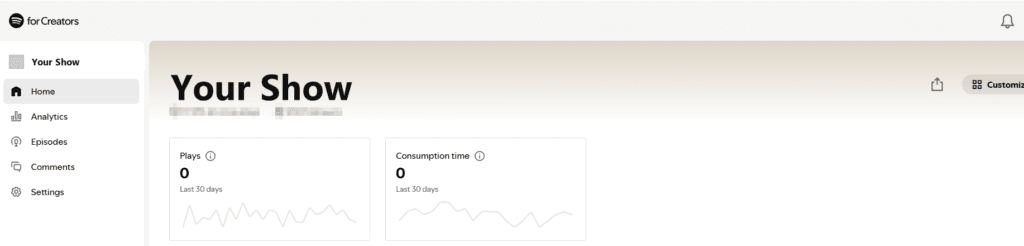
It also generates a real RSS feed, so your show is not locked to Spotify by default. You can submit that feed to Apple Podcasts and the other directories, though you do the submitting yourself rather than getting it automatically. The analytics dashboard covers listener demographics, location, and device, and the Spotify Partner Program opens ad and subscription revenue once you qualify. The honest catch: the ad split runs around 50%, steeper than most paid hosts, and everything routes back through Spotify’s tools. Your growth is tied to their platform decisions.
Where Buzzsprout wins
Buzzsprout wins on ownership, measurement, and the stuff that matters once a show gets real. Your feed is a plain, portable RSS feed you can pack up and move to any other host later, so you are never trapped by one company’s roadmap. That alone is the reason a lot of serious podcasters pay instead of hosting free.
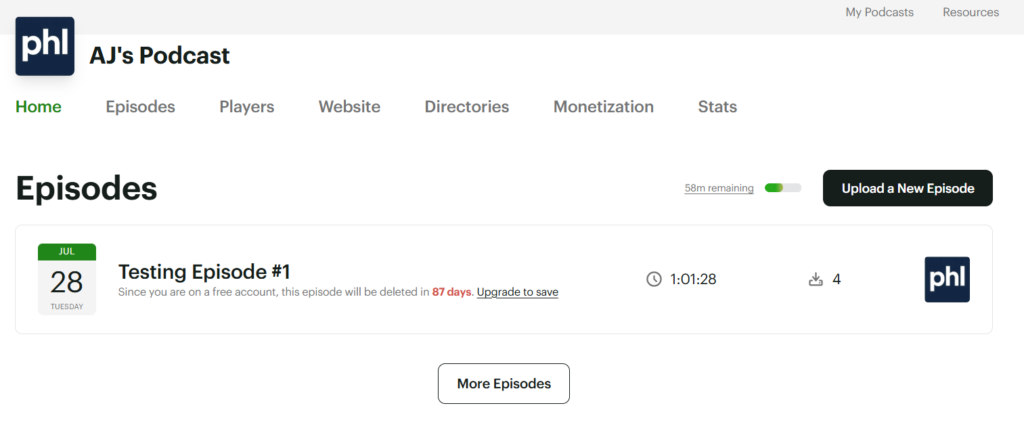
The analytics are IAB-certified and cover every app your show reaches, not just one platform’s listeners, so your download numbers hold up when a sponsor asks to see them. Distribution is automatic to Apple Podcasts, Spotify, Amazon Music, and the rest, with no manual RSS submission. Support is fast and staffed by actual humans, which is worth more than it sounds the first time something breaks. The tradeoff is real though: the free plan hosts only 2 hours a month and wipes episodes after 90 days, so if you want permanent hosting you are paying from $15 a month.
Spotify for Creators vs Buzzsprout on price
On raw price this is not close. Spotify for Creators is free with unlimited hosting, and Buzzsprout starts at $15 a month billed annually for its Audio plan, which caps you at 6 upload hours a month, confirmed on buzzsprout.com/pricing. Buzzsprout does have a free tier, but it holds only 2 hours a month and deletes episodes after 90 days, so it works for a trial run and not much more.
So the paid question is really a value question. You are not paying Buzzsprout for storage, since Spotify gives that away. You are paying for portable ownership, cross-platform analytics that sponsors trust, automatic distribution, and support that answers. If none of that matters to you yet, free is the rational pick. The day it starts to matter, the $15 stops feeling like a cost.
Which should you choose?
If you want to own your feed, measure real downloads across every app, and reach support fast, pick Buzzsprout. Try Buzzsprout. The honest downside: it is built around one show, so a second podcast means a second bill, and the free tier only holds episodes for 90 days.
If you want hosting that truly costs nothing and you are happy operating inside Spotify’s ecosystem, Spotify for Creators is the right free pick. There is no affiliate angle here and no link to push. Just know the tradeoff: a roughly 50% ad split, manual RSS submission to reach Apple and the rest, and a show whose fortunes are tied to one platform. If you are weighing other paid options too, read our guides on Buzzsprout alternatives and the best hosts for beginners.
FAQ
Is Spotify for Creators really free? Yes. Hosting, storage, and uploads are free with no monthly fee, and there is no paid tier to upgrade to. Spotify makes its money on the ad and subscription split, not on hosting fees. Taking a cut of that split is the Partner Program, and you can join it without hosting on Spotify if your host supports it.
Can you move a podcast off Spotify for Creators later? Yes, because it generates a standard RSS feed. Moving hosts still means setting up a redirect so you keep your subscribers, which is the part people forget. Buzzsprout makes the import side of that switch simple, and our step-by-step guide to moving off Spotify for Creators covers the redirect that keeps your subscribers.
Does Spotify for Creators distribute to Apple Podcasts? It can, but you submit the RSS feed to Apple Podcasts Connect yourself. Buzzsprout submits to Apple and the other directories automatically when you publish.
Is paid hosting worth it over a free option? If you want portable ownership, cross-platform analytics, sponsors’ trust, and real support, yes. If you just want to publish and are fine living inside Spotify, the free route is the sensible call.